E46 M3 Upgrades: Reliability First, Then Suspension, Exhaust and Handling
Every E46 M3 is now at least twenty years old. Before springs, headers or wheels, deal with the S54's known weak points: rod bearings, VANOS and the rear subframe mounting area. Here's the order we'd follow, and where the sources disagree.
In this article
The E46 M3 is old enough now that the best upgrades are the ones that keep the S54 alive. Before springs, headers or wheels, deal with what owners call the "big three": rod bearings, VANOS and the rear subframe mounting area. Then catch up on maintenance, and only then spend on suspension, exhaust and wheels. This guide to E46 M3 upgrades lays out that order, and is honest about where the sources disagree.
The S54 in brief, and why it sets the agenda
FCP Euro's definitive S54 guide gives the basics: a 3.2-liter (3,246 cc) inline-six with an 87 x 91 mm bore and stroke, 11.5:1 compression, individual throttle bodies, double VANOS variable cam timing and a single timing chain. FCP lists it at 333 hp at 7,900 rpm and 262 lb-ft at 4,900 rpm, running on 10W-60 oil.
A high-revving engine that leans hard on oil pressure and precise cam timing is exactly the kind that punishes deferred maintenance. FCP lists the M3 applications as 2001 to 2006 model years, so every car is now at least twenty years old, whatever the odometer says.
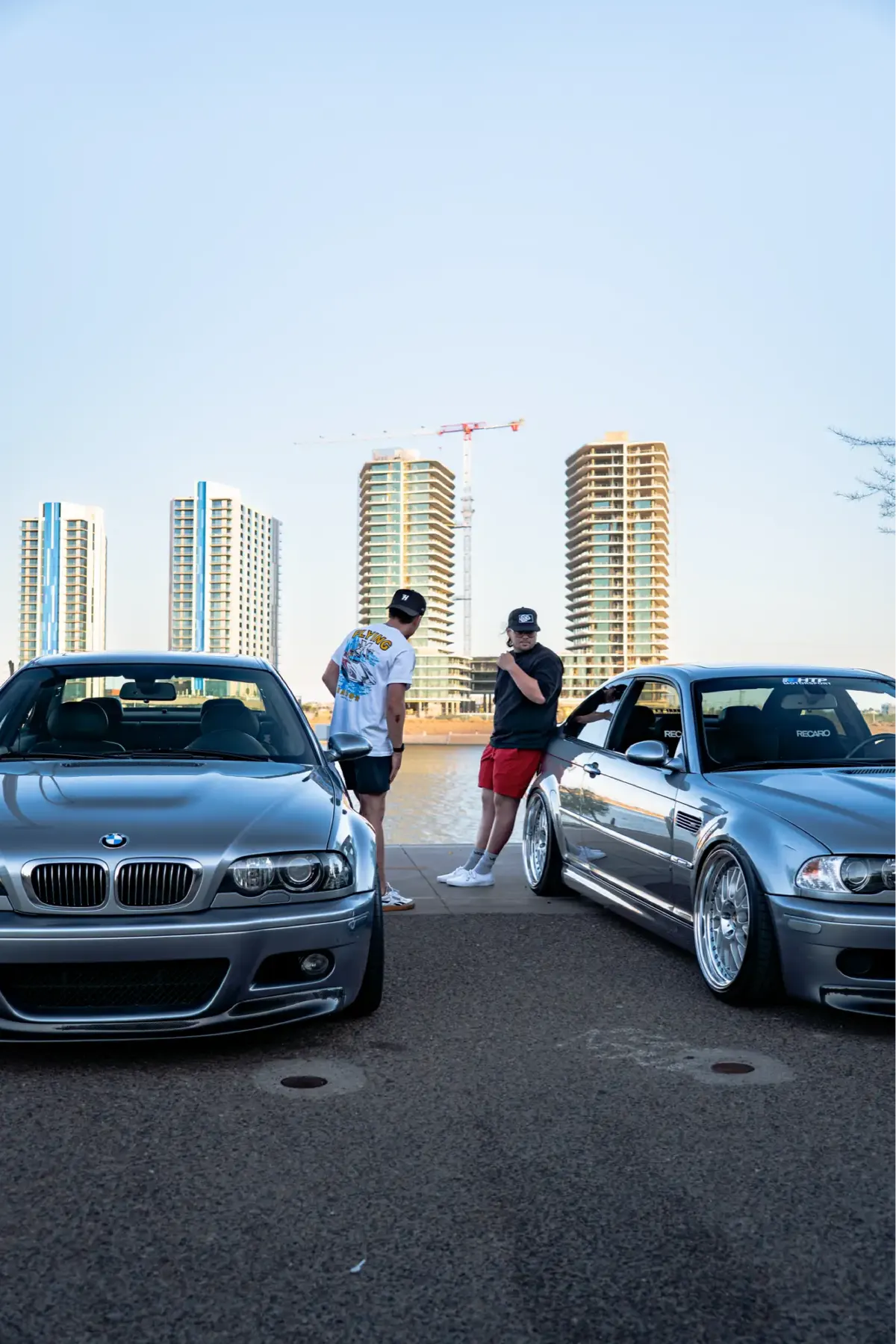
Fix the big three before any E46 M3 upgrades
Rod bearings
ECS Tuning's rundown of common E46 M3 problems states it directly: "BMW did not spec the rod bearing sizes correctly, which causes premature wear and eventual failure." BMW addressed part of the population. Kies Motorsports' M-car buyer's guide refers to "the connecting-rod-bearing service action for cars built from February 12, 2001 through May 22, 2003" and tells buyers to ask for the paperwork. FCP adds that later M3s and Z4 Ms have failed too, so a build date outside that window doesn't clear a car.
How often should they be done? Nobody official says. BimmerWorld notes that "BMW has never publicly stated a replacement interval or expected lifespan for any bearing shells," and reports seeing worn bearings at under 50,000 miles alongside some that looked fine at 200,000. Our position is simple: if there's no documented bearing job, budget for one before you budget for power. It's the kind of job our engine and transmission builds team handles.
VANOS
ECS says tabs on the camshaft hubs "have a tendency to break off and find themselves in the timing chain, which can spell disaster for your engine," and calls updated hubs critical whenever VANOS is serviced. FCP's guide adds more: cam sprocket bolts that owners report backing out, solenoid pack solder joints that crack with heat cycling, and sealing-plate seals that shrink and leak. FCP also points out there is "no symptom for one broken tab," which is why a car with unknown history deserves a proper look, not just a listen. FCP recommends replacing the VANOS filter every 30,000 miles.
The rear subframe mounting area
The usual name is a little misleading. BMW Tuning's E46 subframe article explains that the problem is usually the "rear axle carrier panel," the unibody sheet metal the subframe bolts to, not the subframe itself. It names the M3 among the most prone models because of its power. It lists clunking or creaking from the rear under acceleration as a symptom, but warns that failure can come with no symptoms at all.
ECS adds that cars used only for "standard street driving" can still crack, and that confirming the condition may require removing the subframe. Kies tells buyers to "check the rear axle carrier panel, not just the bolt-on subframe." Order matters for the fix too. BMW Tuning says "existing cracks need to be repaired before the plates are installed," and that BMW's own foam-injection fix is no longer offered. Weld-in reinforcement on an uncracked floor is the preventive route.
The oil pump nut: a contested fourth item
This is where the sources disagree. FCP's 2019 safety-wire how-to lists the S54 among BMW sixes with a history of the oil pump nut coming loose, and recommends safety wiring. The Autopian, working from FCP's explanation of the mechanism, lists the E46 M3 as an exception and says failures are most commonly reported on the M54 3.0-liter. FCP's own S54 guide describes the S54 risk differently: the oil pump sprocket shearing off its shaft, with upgraded shaft and bolted-sprocket kits on the market.
Our take: treat it as an inspection item, not a certainty. The pump drive sits under the oil pan, so the sensible time to look at it is while the pan is already off for bearings.
Worth knowing: Before any of this, run the VIN. Kies warns that "certain unrepaired E46 cars, including M3s, have received a Do Not Drive warning" over Takata airbags.
Then catch up on S54 maintenance
Once the big three are handled, these are the items the sources call out:
| Item | What the source says |
|---|---|
| Valve clearance | BMW calls for a check every 30,000 miles (FCP); the S54 uses shims (ECS) |
| VANOS filter | Replace every 30,000 miles (FCP) |
| Upper exhaust-side timing chain guide | The OE guide can wear "in as little as 30,000 miles" (FCP) |
| Water pump and hoses | Pump failures reported as soon as 60,000 miles after replacement; hoses and O-rings degrade (FCP) |
| Coolant | "Only the genuine BMW blue antifreeze should be used," mixed 50/50 with distilled water (FCP) |
| Oil | Originally Castrol TWS 10W-60 (FCP) |
| Common leaks | Oil filter housing, VANOS oil line, oil pan, front and rear main seals (ECS) |
Cooling deserves extra attention here. Plastic and rubber parts that are twenty years old don't get on well with an Arizona summer, and an overheated S54 turns a maintenance bill into an engine bill. Our repair and service team handles this preventive work.
Suspension and handling: refresh before you upgrade
A twenty-year-old car usually has tired dampers and bushings, so the first suspension "upgrade" is often getting the car back to how it should feel. BimmerWorld's street suspension guide starts its mild-upgrade scenario with shocks, then moves to spring and shock packages and calls a sway bar upgrade "a wise choice." On bushings, it says "urethane can be nearly as comfortable as stock rubber but the performance benefit is worth any small decrease in comfort." For street cars it adds: "We recommend the stock alignment settings with any street suspension."
If you're deciding how far to go, our coilovers vs. lowering springs guide covers the trade-offs. On a car you drive on Valley roads, ride quality and bump travel matter more than an extra half-inch of drop.
Exhaust and intake: sound first, power second
On a naturally aspirated S54, bolt-ons are mostly about sound and response, and the published power gains are modest. FCP estimates cold-air intakes at 10–15 hp without a tune and headers at around 20 whp on their own. Both are FCP's estimates, not promises about what your car will make. FCP also notes that CSL-style carbon airboxes require a MAP-sensor conversion and a tune, and it recommends a DME tune after intake or exhaust changes in general.
The legal line is the same as on any car. If a header or front pipe removes or replaces a catalytic converter, it has to be certified for your car to be street legal. Catless parts are not street legal in the US. Our guide to BMW exhaust upgrades covers sound, drone and what's actually worth buying.
Wheels and tires last
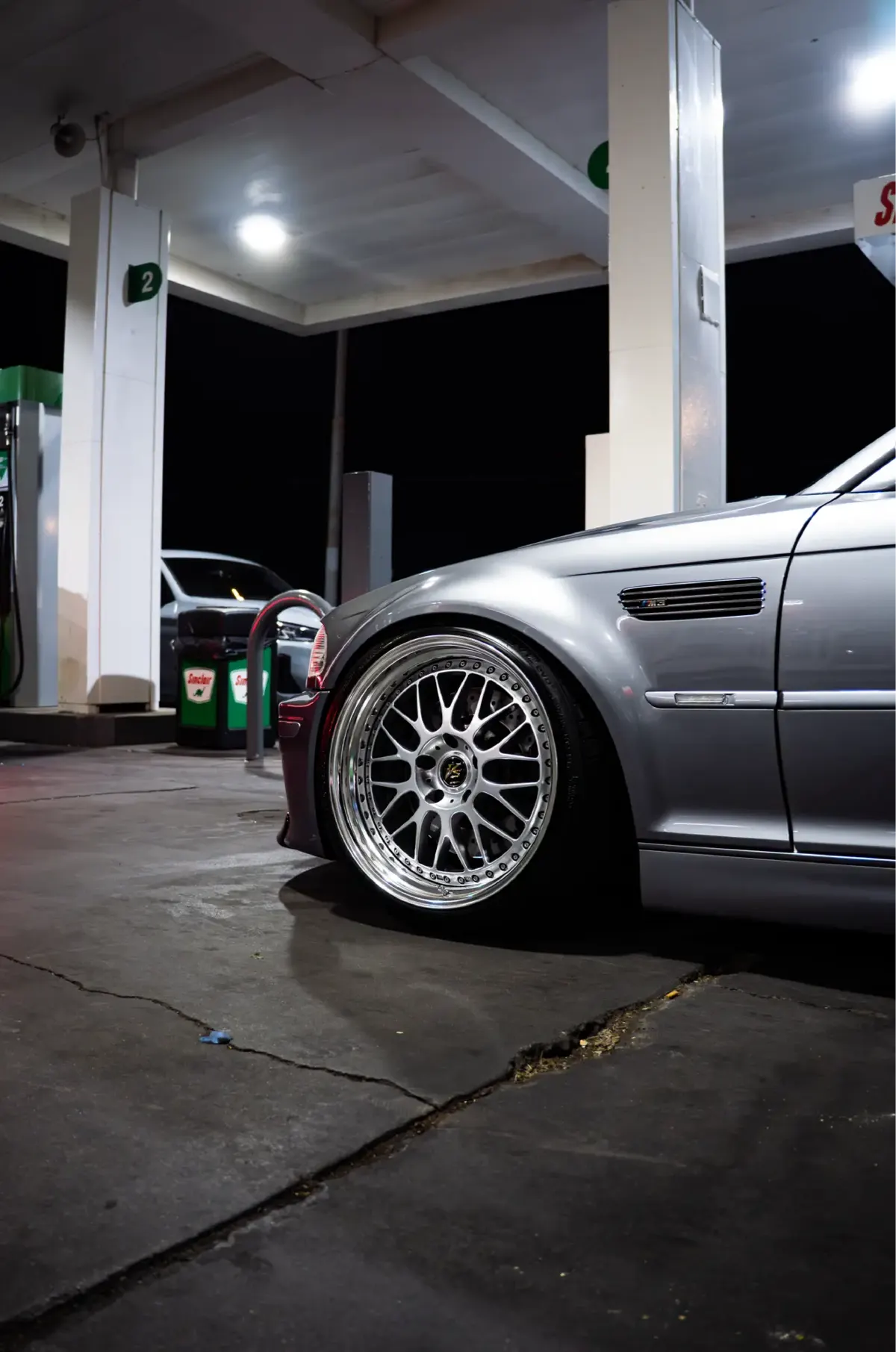
Wheels change the look more than anything else, and a good tire changes the handling more than anything else. Do them after the car is mechanically sorted, and confirm offset, width and tire size for your exact car before buying. We handle fitment and alignment under wheel and tire services.
Where to start with your E46 M3
- Records and VIN: airbag status, the bearing service action, any bearing, VANOS or subframe invoices.
- Inspection on a lift: the rear carrier panel, leaks, cooling condition and a fault scan. If you're still shopping, our pre-purchase inspection guide for M cars covers what that should include.
- Bearings, if they aren't documented, with a look at the oil pump drive while the pan is off.
- VANOS and cooling, to the sources' intervals.
- Subframe area reinforcement, after any existing cracks are repaired.
- Suspension refresh, then exhaust, intake and wheels, in whatever order suits how you use the car.
At HTP, every performance upgrade plan starts with an in-person look at the car and a conversation about what you want from it. If your E46 is due for that conversation, you can book a time whenever suits you.