F80 vs G80 M3: Tuning Potential, Reliability and Ownership Compared
Both are twin-turbo inline-six M3s that respond well to a tune, but they are different cars to own. The S55 vs. S58, factory outputs and gearboxes, honest tuning headroom, the crank hub debate, and what to inspect on each.
In this article
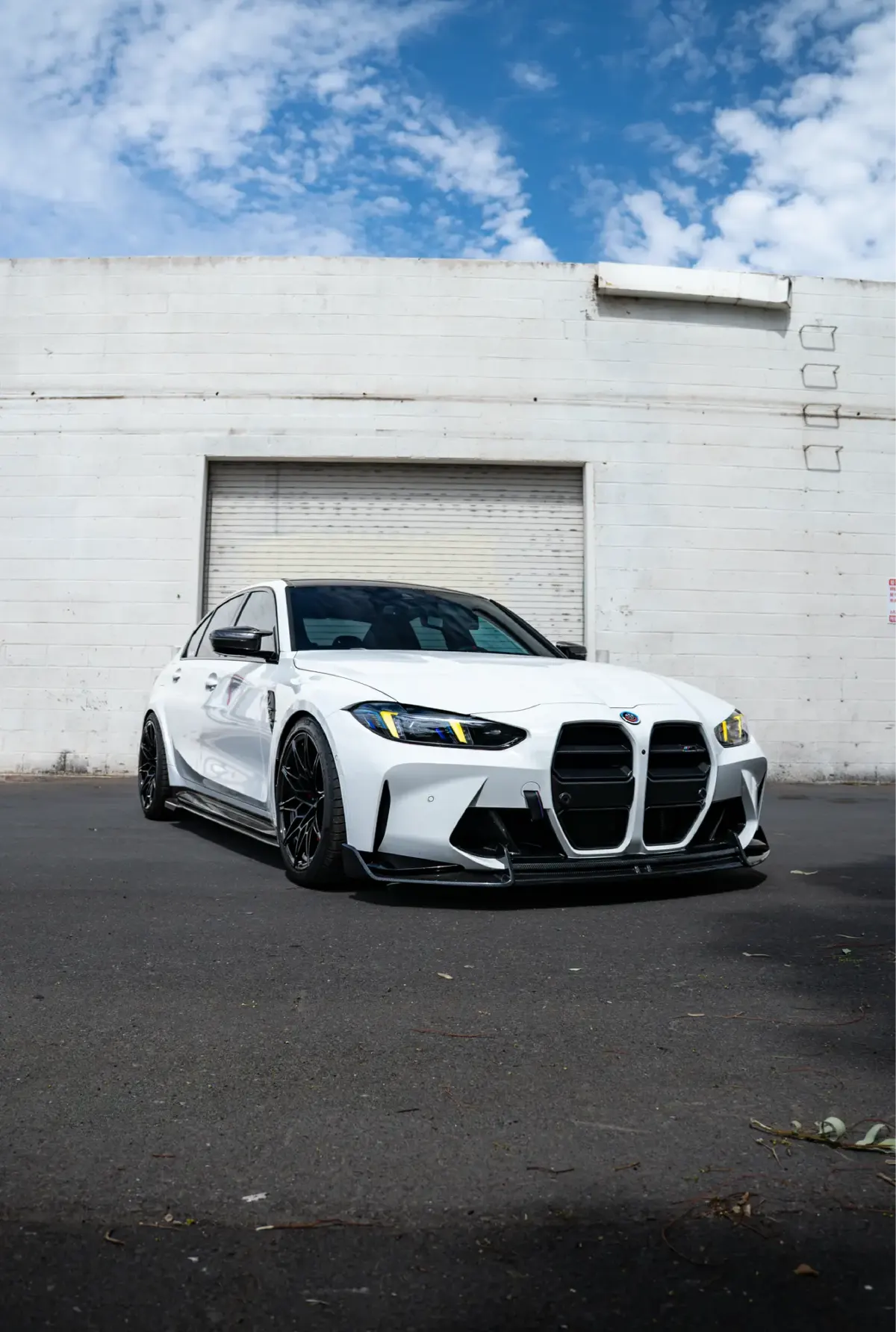
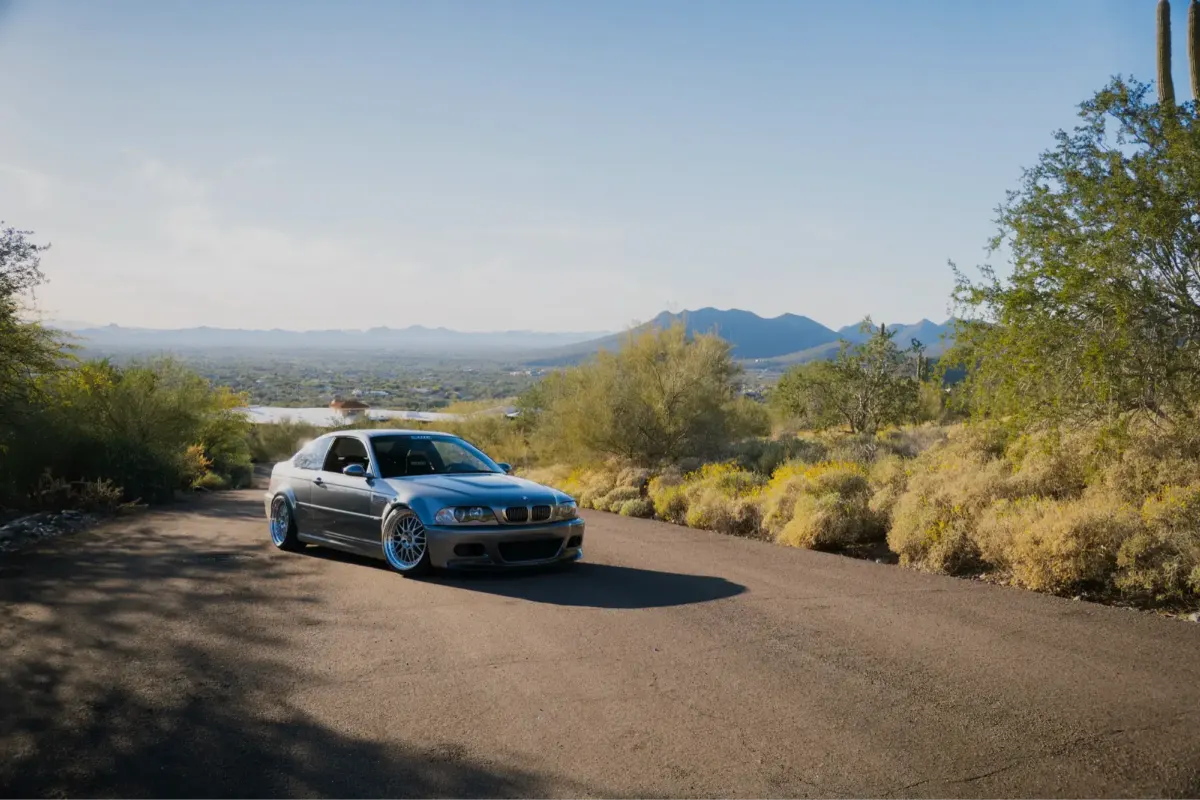
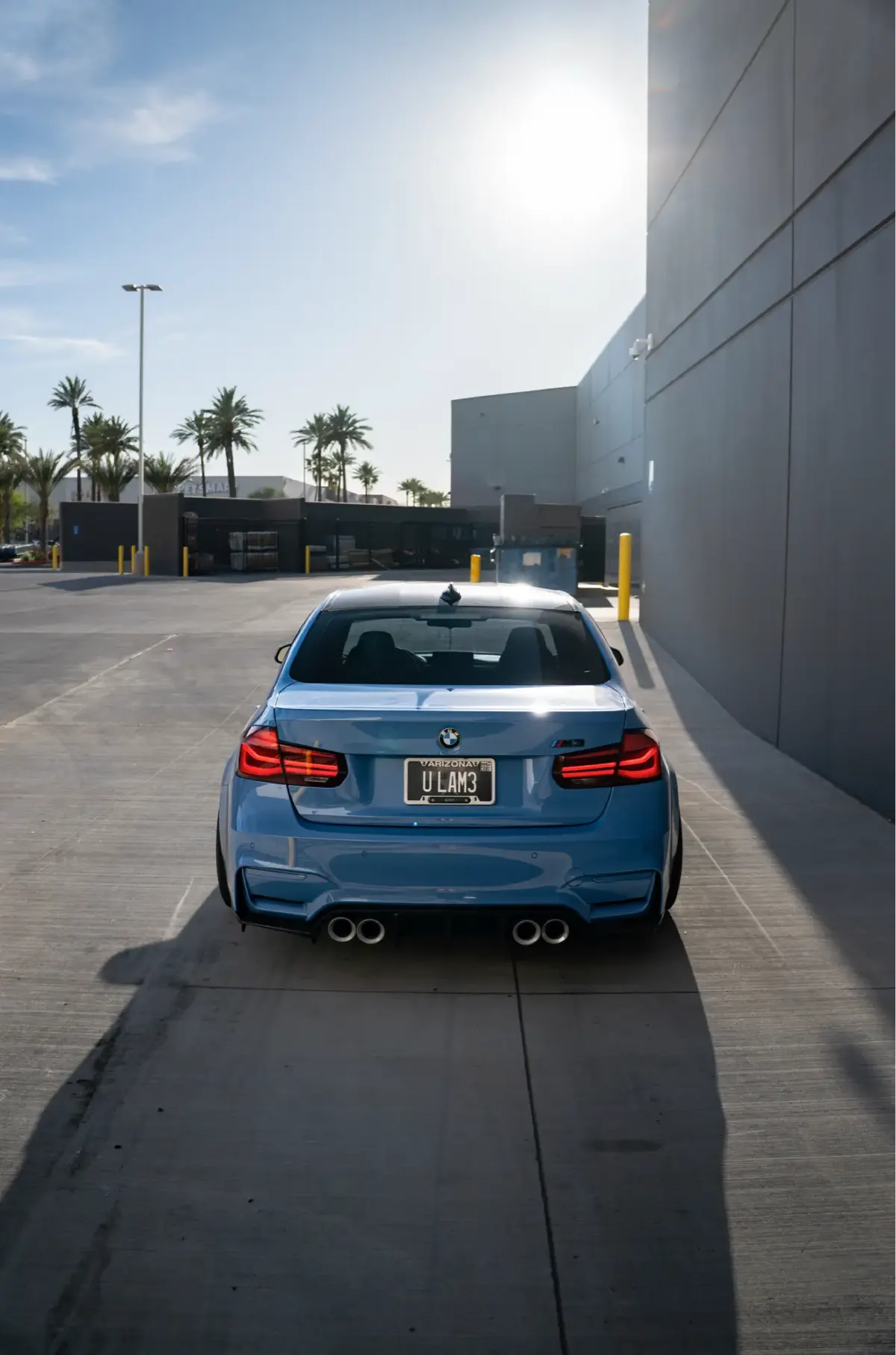
Both are 3.0-liter twin-turbo inline-six M3s, and both respond well to a tune, but they're different cars to own. The F80 is the older car, rear-drive only, with a manual or a dual-clutch, and it comes with the S55 crank hub question. The G80 has a forged-crank S58, more factory power, a choice of manual or a true automatic, and optional xDrive. This F80 vs G80 M3 comparison covers engines, honest tuning headroom, known issues and what to inspect, so you can pick the one that fits your plans rather than the one that wins the spec sheet.
F80 vs G80 M3 at a glance
| F80 M3 | G80 M3 | |
|---|---|---|
| Years | 2014–2018 | Debuted as a 2021 model; BMW calls the 2027 CS Handschalter the close of the generation |
| Engine | S55 3.0-liter twin-turbo inline-six | S58 3.0-liter twin-turbo inline-six |
| Factory output | 425 hp; Competition Package 444 hp and 406 lb-ft; CS 453 hp | 473 hp and 406 lb-ft; Competition 503 hp and 479 lb-ft; Competition xDrive (2025 on) 523 hp; CS 543 hp |
| Gearboxes | Manual or 7-speed M DCT dual-clutch | 6-speed manual (rear-drive base car) or 8-speed M Steptronic automatic (Competition) |
| Driven wheels | Rear | Rear, or M xDrive on Competition models |
Sources: F80 figures from BMWBLOG's S55 overview and BMW's 2016 "30 Jahre M3" release, which describes the Competition Package as "an increase in engine output by 19 hp to 444 hp and 406 lb-ft." G80 figures come from BMWBLOG's 2020 engine overview, G80 buyer's guide and 2025 lineup guide, plus BMW's CS Handschalter release.
S55 vs S58: what changed under the hood
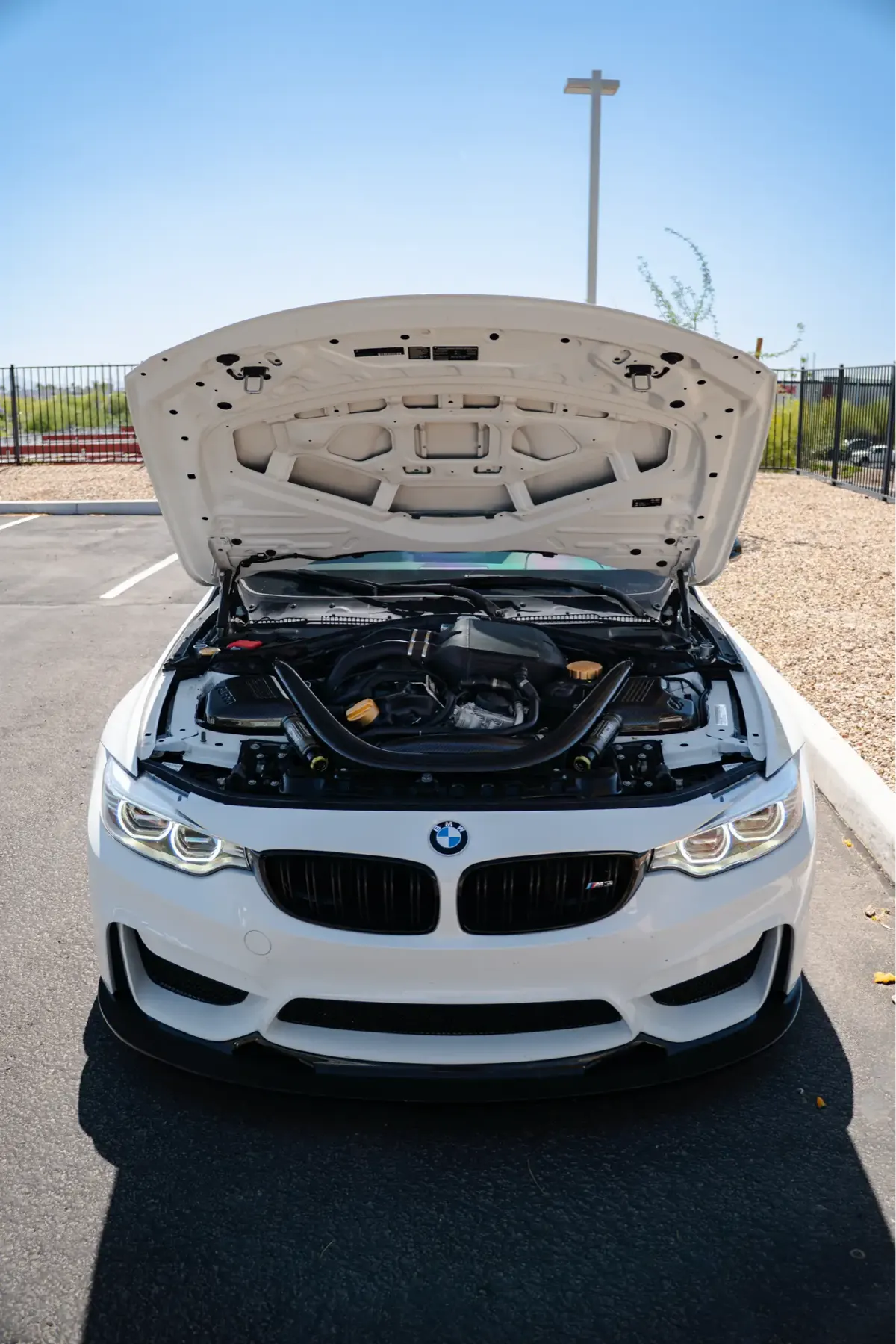
BMWBLOG describes the S55 as a closed-deck 3.0-liter with an 84 x 89.6 mm bore and stroke, 10.2:1 compression and two mono-scroll turbochargers, one for each group of three cylinders. The S58 keeps the twin mono-scroll layout but, per BMWBLOG's 2020 overview, adds a forged crankshaft, a "sleeve-free closed-deck construction," a cylinder head core made with 3D printing that allows a specific cooling-duct design, and fuel injection at up to 350 bar. In Competition form it makes peak power at 6,250 rpm and revs to 7,200.
Cooling grew too. The same overview lists low- and high-temperature radiators, a horizontal oil cooler, an electric fan, a separate transmission oil cooler on Competition cars, and an electric pump that keeps cooling the turbos after shutdown. That matters in the Valley, where heat soak is a real limit for a tuned car. Our Arizona heat soak guide covers it in detail.
The gearbox story changed as well. BMWBLOG calls the G80 the first M3 to receive "a true automatic transmission (instead of a dual-clutch unit or sequential manual gearbox)." Production of the G80 began at BMW's Munich plant in November 2020, according to BMW's production-start release.
Tuning potential, described honestly
Both engines respond strongly to software, whether that's an off-the-shelf flash tune, a custom calibration or a piggyback module. Published power claims for both are large. Read them carefully: they mix crank and wheel figures, pump fuel and ethanol, and stock and upgraded turbos.
- S55: BMWBLOG's overview says "simple modifications, such as a tune and downpipes" can take it past 500 horsepower, and that 700-plus with upgraded turbos and a built engine "won't likely be reliable long term." Kies Motorsports documented one F80 that went from roughly 500 whp on 93 octane, with cooling, intake and exhaust already done, to 742 whp and 716 lb-ft on an E48–E50 blend. The finished combination included upgraded turbos, upgraded injectors, an ignition-coil conversion and a custom flex-fuel calibration. Kies says the fuel system was at its practical limit around E50, and that the result "sits near the level where stock connecting rods deserve serious respect."
- S58: BMWBLOG's 2024 S58 piece says tuners have pushed it "beyond 800 horsepower with stock turbos," but doesn't say who, on what fuel, or measured where. Treat that as a ceiling claim, not a plan.
The more useful comparison starts from the factory. A G80 Competition begins at 503 hp against 444 hp for an F80 with the Competition Package, so any given power target is a smaller step above stock. The crank hub debate in the sources below is also specific to the S55 (and its N55 sibling). Either way, every big number comes with fuel, hardware and risk attached. Downpipes need a tune, and catless parts aren't street legal in the US.
Our performance tuning work is verified with in-house dyno time, and our guide to what to know before you book a BMW tune covers the questions to ask first.
The S55 crank hub question
What the concern is. BMWBLOG describes crank hub failure as rare but serious: under high torque the hub can slip or spin on the crankshaft, throwing off timing and potentially causing major engine damage. Motorsport Calibrations, which sells a replacement, says the factory hub's friction plates "are known to slip" and that piston-to-valve contact can follow.
How common it is. Nobody has a good number. Kies' M-car buyer's guide notes that "crank-hub risk has no published BMW incidence rate," and suggests focusing concern on "tuned, high-torque, or heavily tracked cars." Precision Sport, which also sells a fix, says "the risk exists on every S55, but whether you address it depends on the type of owner you are." It reports stock cars failing in normal driving and 600–700 hp builds running for years without trouble. The honest summary: the failure mode is real, the frequency is unknown, and many of the loudest voices sell the fix.
What the fix involves. Vendors offer one-piece or keyed hubs, with or without pinning to the crank. Motorsport Calibrations recommends its unpinned hub for "standard to Stage 1 tuned" engines and the pinned version for anything beyond. Precision Sport says its pinned job starts by removing the engine's front cover and dropping the oil pan to clear drilling debris. That's engine-level work, and it should be planned alongside any meaningful power increase, not after one.
Worth knowing: If you're buying an F80 that's already tuned, ask whether the hub has been addressed and get the invoice. A tune with no hub history is a question to answer before purchase, not after.
What to inspect on each
F80 M3
- Recalls: Kies says affected 2016–2017 M3 and M4 cars "had a carbon-fiber driveshaft recall," and that a small group had a rear subframe bolt recall tied to earlier differential service.
- Software history: Kies lists modifications, tune history, "DME flash history, timing faults," cooling, oil leaks and DCT behavior.
- Age items: BMWBLOG's S55 overview flags carbon buildup on the intake valves from direct injection, and oil leaks at the valve cover, oil pan and oil filter housing gaskets.
G80 M3
- Break-in and software: Kies says to look for "proof of the 1,200-mile running-in service" and any "software or piggyback tunes."
- Campaigns: Kies advises verifying them by VIN, including "limited bearing-shell delivery stops that affected small production groups."
- Damage and wear: tire and wheel damage, front bumper and underbody damage, the cost of carbon-ceramic brakes if fitted, and matched tires on xDrive cars.
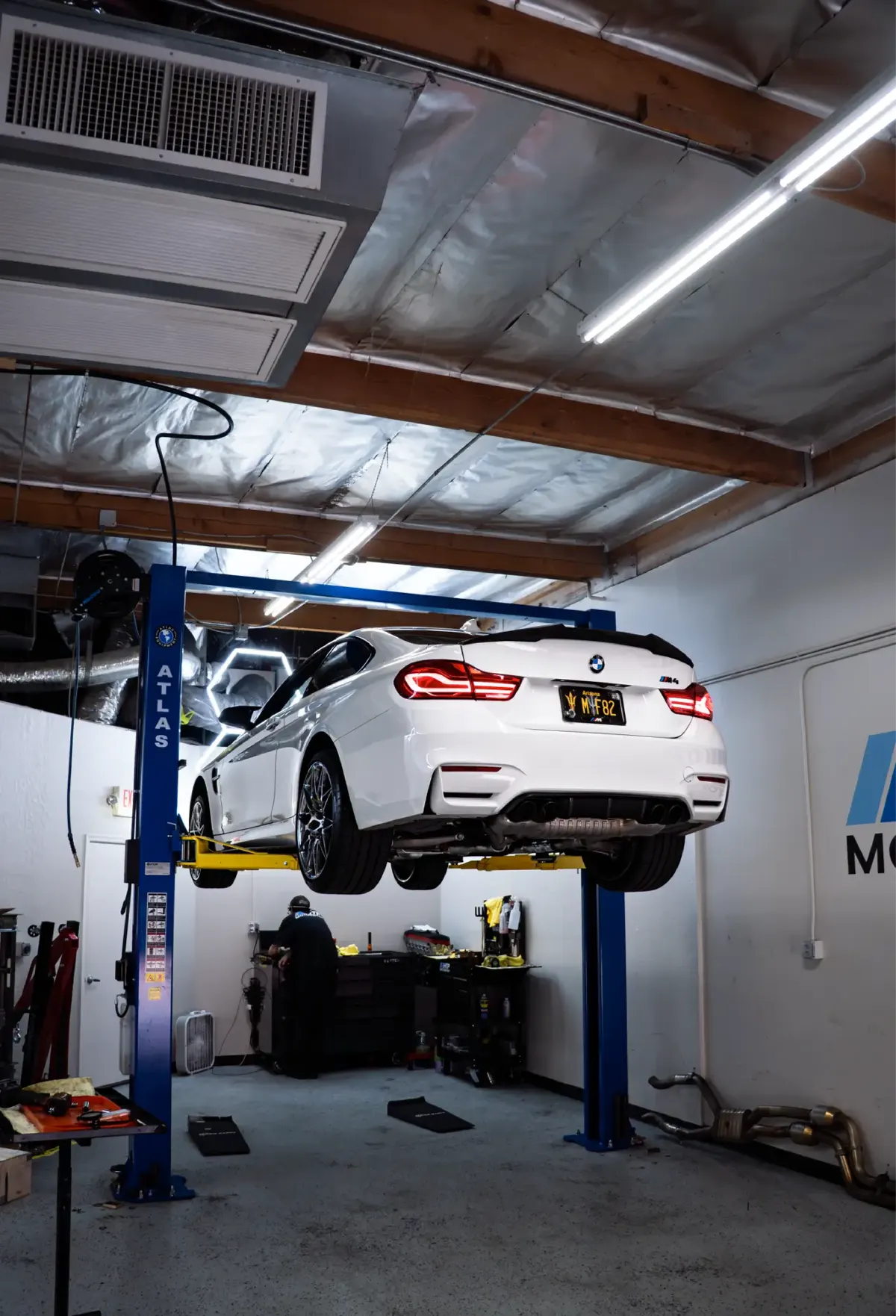
A pre-purchase inspection should cover all of this with a full module scan, a look underneath and a cold-and-hot test drive. Our M-car pre-purchase inspection guide explains what that involves.
Which one fits your plans
- Choose an F80 if you want the older, rear-drive-only car with a manual or dual-clutch, and you're prepared to make a decision on the crank hub, especially if you plan to add power.
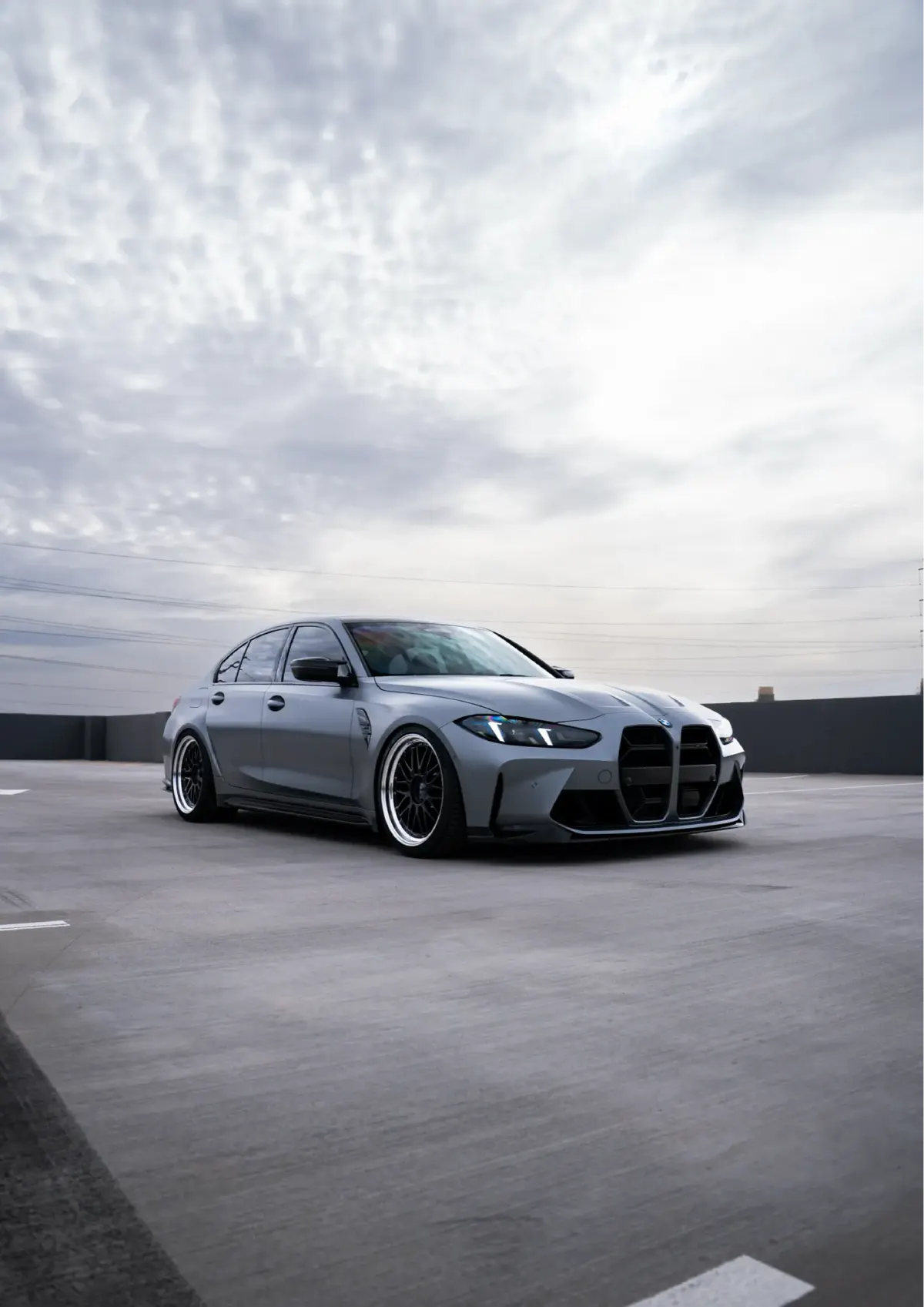
- Choose a G80 if you want more factory power, a newer car, a choice of manual, automatic or xDrive, and a forged-crank engine that sits outside the S55 hub debate. It's also now a finite platform: BMW describes the 2027 CS Handschalter as "marking the close of the M3's sixth generation."
Whichever you lean toward, the order is the same: inspect first, fix what the inspection finds, then plan power. If you already own a G80 or G82, our G80 M3 upgrade guide lays out that sequence step by step. When you're ready, you can book an inspection or a planning conversation with HTP.