Heat Soak in Arizona: Keeping a Tuned BMW Cool When It's 110°F
Strong on the first pull, flat by the third: that's heat soak, and a Phoenix summer makes it worse. Here's what's happening inside a tuned BMW, and the order we'd fix it in.
In this article
If your tuned BMW pulls hard on the first run and feels flat by the third, the tune probably isn't broken. You're feeling heat soak: intake air, coolant and oil temperatures climbing faster than the cooling system can shed them, and the engine computer protecting itself by giving back power. In an Arizona summer, BMW heat soak gets worse. The fix comes in a set order: maintain what you have, add capacity your logs actually call for, then tune and drive for the climate.
What heat soak is, and what the DME does about it
OneFastShop, a parts retailer that sells cooling hardware, puts it simply in its S58 cooling guide: heat soak is "intake air temperature climbing from one hard pull to the next," and "the DME answers by pulling timing." Retarding ignition timing is the engine's defense against knock. As FuelEconomy.gov notes, many newer engines "can adjust the spark timing to reduce knock, but engine power and fuel economy will still suffer." So the car is behaving as designed. It is just designed to survive, not to repeat its best pull.
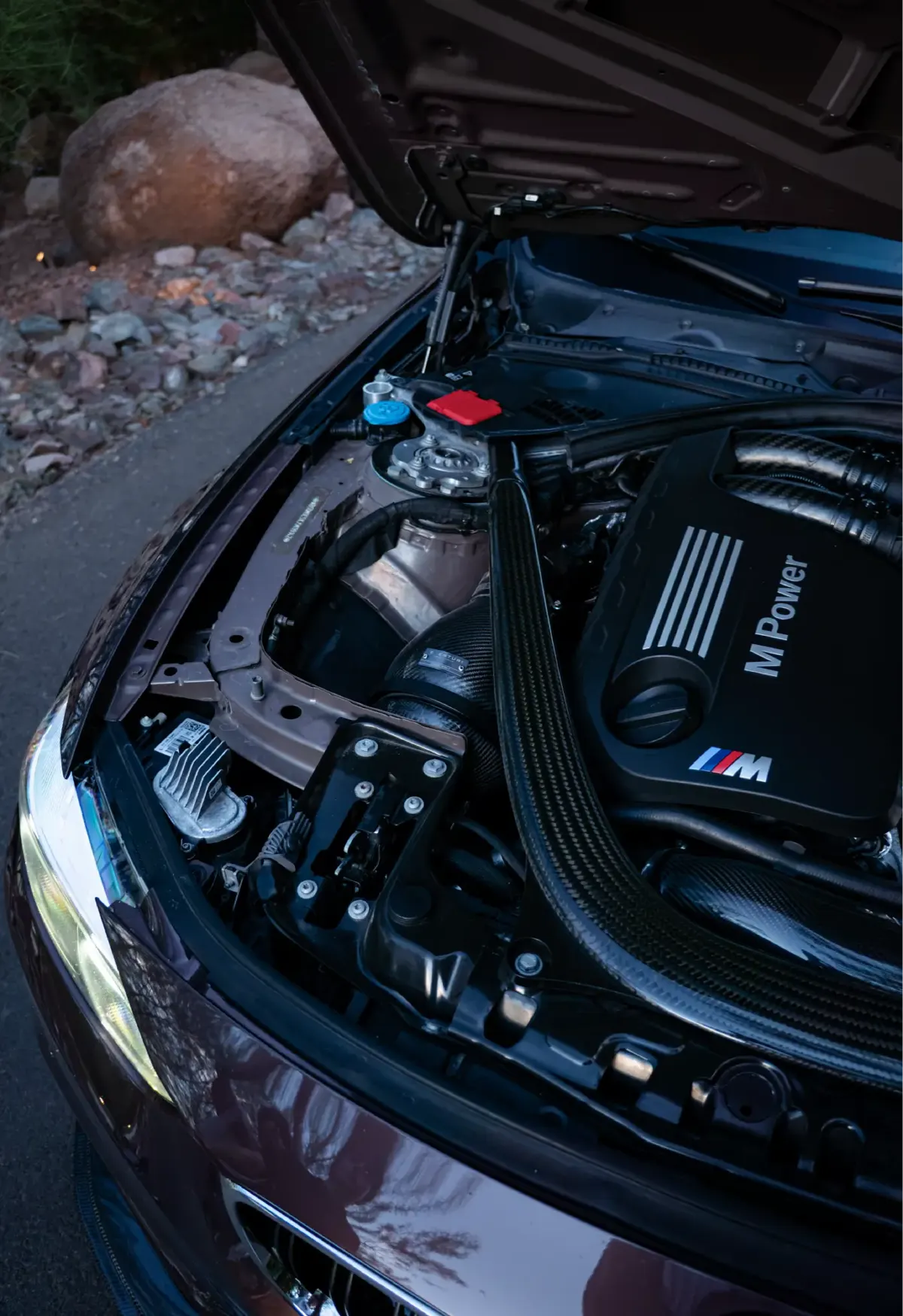
Modern BMW turbo sixes make this a cooling-loop problem as much as an airflow problem. BMWBLOG's B58 vs S58 comparison describes the B58's "water-to-air intercooler integrated into the intake plenum." The S58 goes further, with "separate high- and low-temperature circuits, with electric pumps supporting turbocharger and charge-air cooling." In both, heat pulled out of the charge air goes into coolant, and that coolant has to give the heat back to outside air through a heat exchanger at the front of the car. As BimmerWorld's cooling tech page explains, a heat exchanger "uses fluid to cool something else (usually intake air or oil)."
It isn't only intake air
Oil and transmission temperatures soak too. In the same OneFastShop guide, a G82 M4 Competition owner on a 95°F day at a Colorado track "watched his oil temperature pass 275°F after about eight laps," while coolant "held at 210°F the whole time." That's an owner's account relayed by a vendor, not a lab test. Still, it shows the pattern: coolant can look fine while oil runs away. On the transmission side, the retailer's symptom table lists slower shifts as the warning sign.
Why BMW heat soak is worse in Arizona
Elsewhere, a 95°F track day counts as a hot one. The National Weather Service's Phoenix extreme-temperature data puts the 1991–2020 normal at 111 days a year at or above 100°F and 21 days at or above 110°F. The record is 70 days at 110°F or hotter, set in 2024.
Every heat exchanger works on the gap between its fluid and the air flowing through it, and Arizona shrinks that gap all summer. OneFastShop's rule of thumb is that "cruising 30°F over ambient is normal on an air to water car." Apply that to a 110°F afternoon and intake air sits around 140°F before you've made a single hard pull.
Adding boost makes it worse. Writing about higher-boost B58 maps, OneFastShop says the extra boost "fills that loop with heat faster than the factory heat exchanger can shed it." The result is a car that "loses power on repeated pulls." Stop-and-go traffic on the 101 doesn't help either. With little road speed, the fans do all the work. BimmerWorld notes electric fans "are superior especially in heavy traffic where speeds and air flow are low," but only if they're working.
Fix the cooling system you already have first
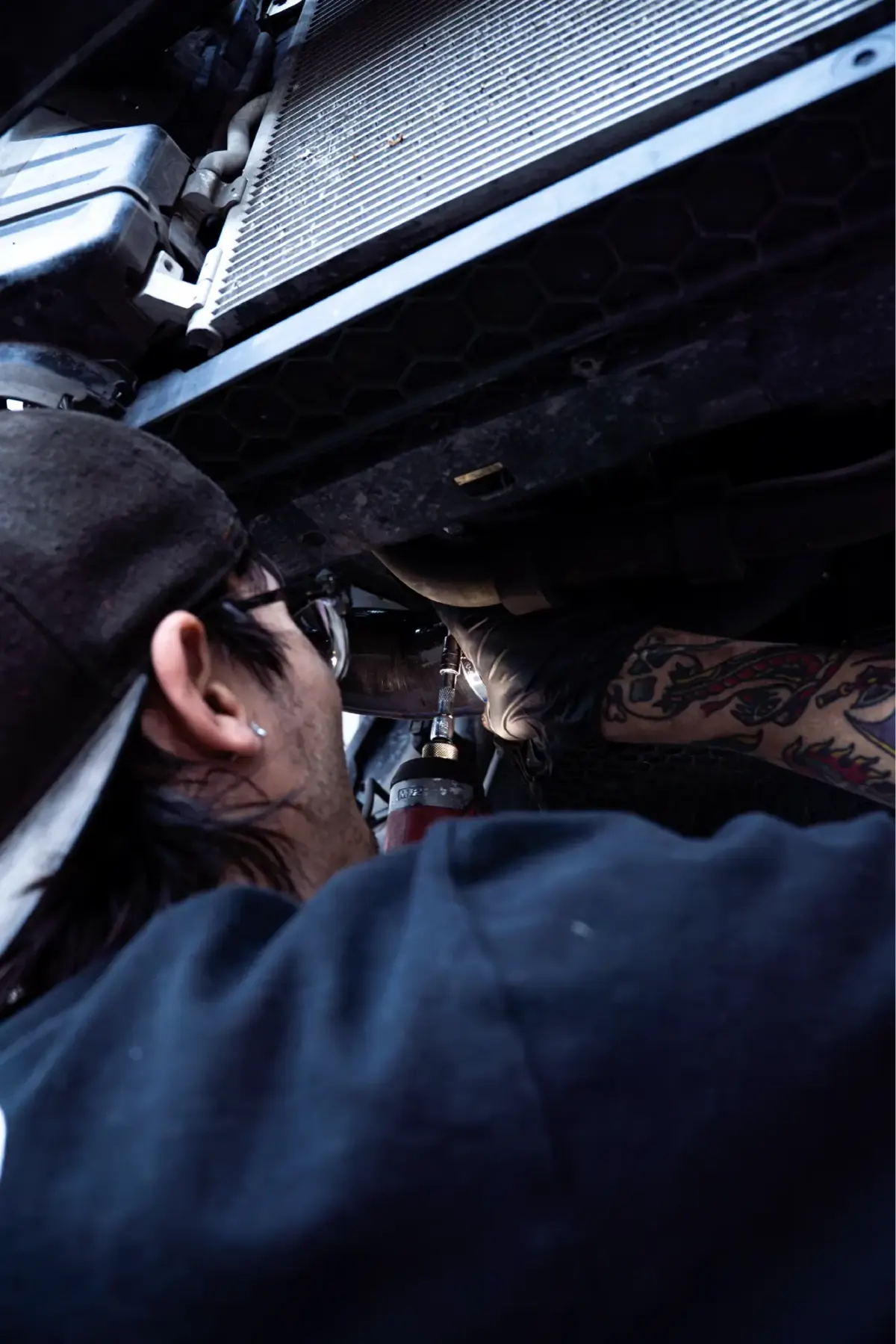
Before you buy anything, make sure the factory system is working at 100 percent. Most of the cheap cooling gains come from here.
- Coolant. Use a BMW-compatible coolant at the right concentration. BimmerWorld notes BMW recommends a 50:50 mix, and that what's on the shelf may not suit BMW engines. Old, diluted or contaminated coolant gives up capacity you paid for.
- Leaks and plastic. BimmerWorld points to plastic radiator end tanks, hose connections and expansion tanks as the usual failure points on BMW cooling systems. Have any slow coolant loss diagnosed before summer, not on the shoulder of the I-10.
- Fans and pumps. Confirm the electric fan and the auxiliary pumps on the charge-air loop actually run. On an air-to-water system, a weak pump on that loop means hotter intake air on every pull.
- A clean stack. Radiators, heat exchangers and the A/C condenser share the same airflow. For track cars, BimmerWorld advises "cleaning the debris and klag from the radiator(s) to help improve air flow." Bugs, road grime and a bent fin pack all cost cooling.
- Transmission fluid. Kies Motorsports' ZF 8-speed article says ZF's guidance is to "shorten the interval under high temperature, high load, or an unknown service history." Phoenix summers and a tune check two of those boxes.
The upgrade hierarchy: what to add, in what order
Once the baseline is healthy, let data decide what you add. For the S58, OneFastShop's order is "front mount heat exchanger, then engine oil cooler, then a transmission cooler on automatic cars." It puts auxiliary radiators after that. The list is written for the S58, but the logic carries over to any air-to-water BMW: fix the loop that's losing first.
| Upgrade category | What it addresses | When it earns its place |
|---|---|---|
| Larger front heat exchanger (charge-air loop) | Intake temperatures that climb from pull to pull | Usually the first step on air-to-water cars, especially tuned ones |
| Engine oil cooler | Oil temperatures that keep rising during sustained hard driving | When logs show oil temperature climbing on track days or long hard runs |
| Transmission cooler | Transmission fluid heat on automatic cars | Tuned automatics driven hard, or track use |
| Auxiliary radiators | Coolant temperature creeping up | OneFastShop's advice: "Add them when your logs show coolant climbing, not before." |
| Charge cooler manifold upgrades | Charge-air cooling at the intake | Reserved for "big power builds," per the same retailer |
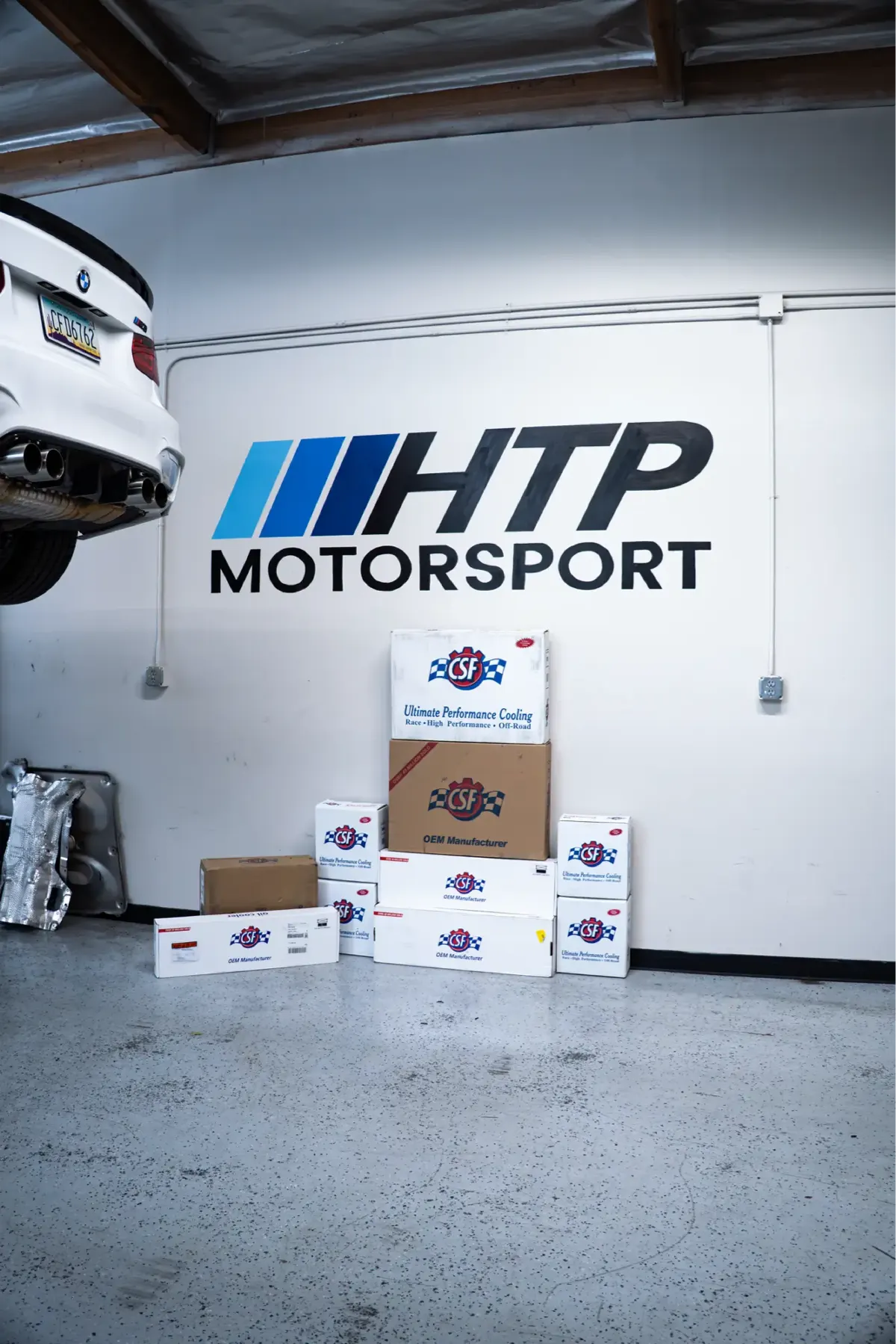
The boxes in this article's lead photo are from CSF, one of several companies making radiators and heat exchangers for BMWs. Whatever brand you consider, confirm the part fits your exact model year, drivetrain and transmission. Also check whether it works with the factory pumps, ducting and splash shields. Our performance upgrades work covers installation and sequencing. If you're working through a G80 or G82, our upgrade-order guide shows where cooling fits among the other upgrades.
Drive and log like it's July
Hardware solves part of this. How you drive solves the rest.
- Log before you buy. Record intake air temperature, coolant, oil and, if you can, transmission temperature across three back-to-back pulls on a hot day. Pull one compared with pull three tells you which loop is losing.
- Give it a cool-down. In the OneFastShop account above, "two easy laps fixed it" once oil temperatures climbed. On the street, drive the last few minutes gently so the fans and pumps can pull temperatures down while air is still moving through the stack.
- Pick your hours. Save hard driving for early mornings from May through September. The air is cooler, the pavement is cooler, and every heat exchanger has a bigger temperature gap to work with.
- Watch the dash. Treat a temperature warning as a signal to back off right away, even when the message says you can keep driving.
When to tune conservatively
A calibration that makes great numbers in mild weather is not automatically the right map for August in the Valley. If the DME is going to pull timing on a hot afternoon anyway, a slightly more conservative map can deliver more consistent power from the first pull to the last, with less stress on the engine. Tell whoever tunes your car what fuel you actually buy and how you drive it in summer. Ask how the calibration handles high intake temperatures.
At HTP, performance tuning is verified with in-house dyno time, and every project starts with a conversation about the car and the owner's goals. For summer track days, race prep means checking brake and cooling systems before the car is driven at the limit, not after it goes into limp mode.
A sensible order for the hot months
- Log a hot-day baseline with three consecutive pulls and note which temperature climbs fastest.
- Restore the factory system: fix leaks, refresh coolant at the right mix, and confirm fans and pumps work. Clean the stack too.
- Add capacity in the order your logs point to. On air-to-water cars that usually means the front heat exchanger first, then oil, then the transmission.
- Revisit the tune for the conditions you actually drive in, and verify the result instead of assuming it.
If your car fades in the heat and you'd like a second set of eyes on the logs, you can book a visit at the Tempe shop. We'll start with the car and your goals before recommending any parts.