BMW Performance Tuning in Phoenix: What to Know Before You Book
Before you book a BMW tune in the Valley: define the goal, know your fuel, check whether your DME is locked, understand the warranty rules, and know what a dyno session should prove.
In this article
- Start with what you want the car to do
- BMW tuning in Phoenix: heat, fuel and emissions testing
- Is your DME locked?
- Warranty: what the federal rule says, and what it doesn't
- What a dyno day verifies, and what it doesn't
- Questions to ask any shop before you book
- What to bring, and how the process usually runs
If you're shopping for BMW tuning in Phoenix, the useful questions in 2026 go beyond "how much power?" Many 2020-and-later BMWs need their engine computer unlocked before they can be flash-tuned. The Valley's heat and emissions testing shape what's sensible. And a tune is only as good as the verification behind it. Here's what to sort out before you book, whichever shop you choose.
Start with what you want the car to do
"More power" isn't a goal a tuner can calibrate to. A daily driver that should feel stronger in traffic, a weekend car for canyon roads and a car headed for track days all call for different maps, hardware and cooling. Be specific about:
- How you'll use it: commuting, spirited weekend driving, track days, or all three.
- What's already on the car: a calibration has to match the hardware. An off-the-shelf map assumes a known parts list, while a custom calibration is written around yours.
- What has to stay street legal, including Arizona emissions testing (more on that below).
- Budget beyond the software: an unlock, supporting hardware, cooling and fresh maintenance items often matter as much as the map.
At HTP, every project starts with a conversation about the car and the owner's goals, plus an in-person look at the car, before anything is recommended. As our performance tuning page puts it, some tuning refines what's already on the car, while larger gains generally need supporting hardware. If you have a B58 car, our B58 tuning guide explains what "stage 1" and "stage 2" usually mean. For S58 cars, see the G80 M3 and G82 M4 upgrade guide.
BMW tuning in Phoenix: heat, fuel and emissions testing
Heat changes what "fast" means
A calibration that shines on a mild morning will meet 110°F afternoons here. When intake temperatures climb, the engine computer pulls timing to protect itself, so summer consistency matters as much as peak numbers. Our heat soak guide covers why, and which cooling upgrades are worth doing first.
Tune for the fuel you actually buy
FuelEconomy.gov notes that US premium is typically rated "91–94," and that while many newer engines "can adjust the spark timing to reduce knock," power "will still suffer." A map written for higher octane than you buy leaves the engine computer pulling timing to compensate. Tell the tuner exactly what you fill up with. If ethanol blends are on the table, remember that the Department of Energy defines E85 as "51% to 83% ethanol, depending on geography and season." A flex-fuel setup has to measure what's in the tank rather than trusting the pump label.
Emissions testing applies here
The Arizona Department of Environmental Quality requires emissions testing in the Phoenix and Tucson metro areas, and the test includes an on-board diagnostic check. Federal law separately makes it a violation to "remove or render inoperative" emissions control equipment (42 U.S.C. § 7522). Catless downpipes and other emissions-equipment removal are not street legal. A good shop will tell you that up front rather than help you work around an inspection. Our exhaust upgrade guide goes deeper on downpipes.
Is your DME locked?
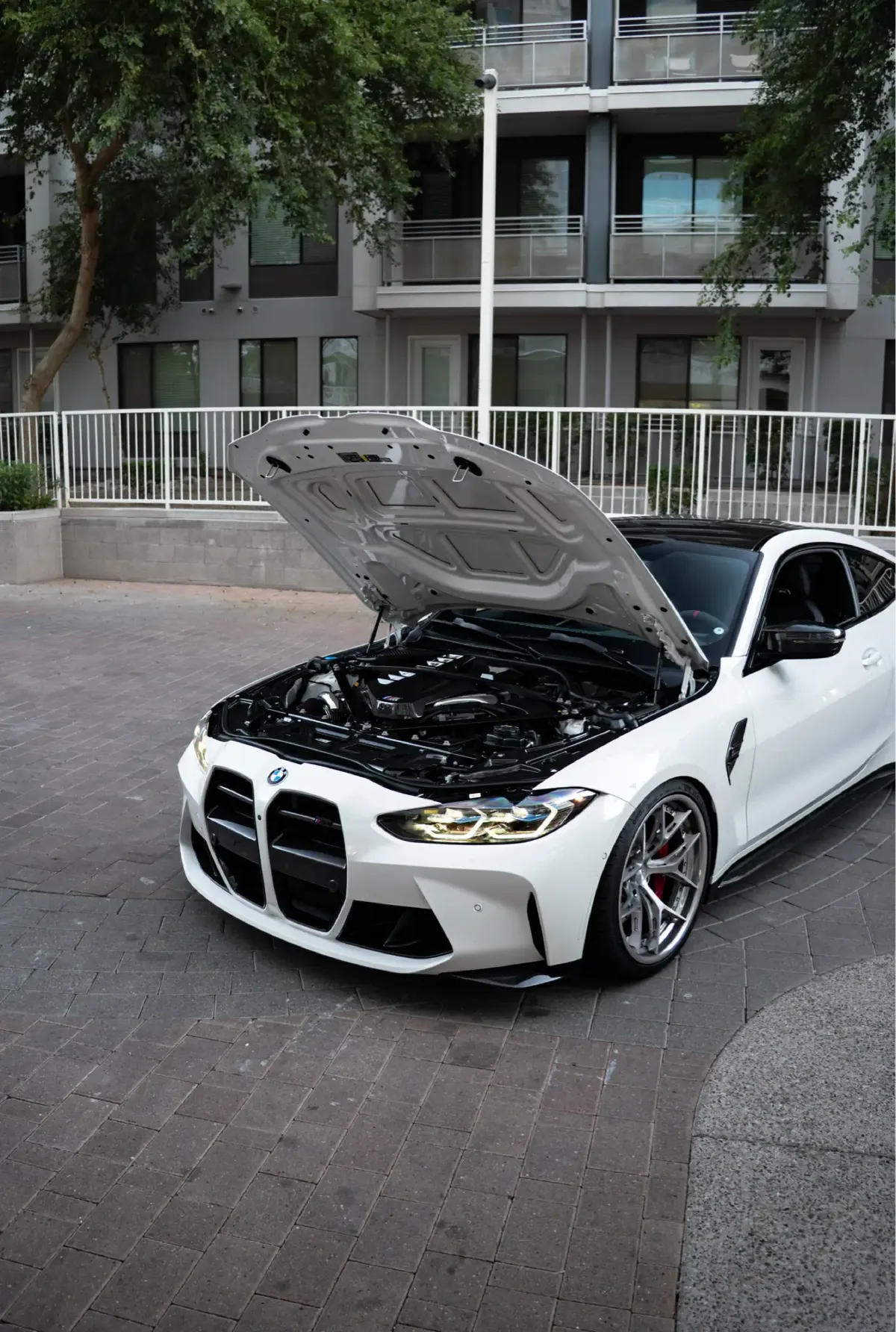
This is the 2026 question. In its B58 stage guide, OneFastShop relays a tuning-software developer's position that B58 "DMEs produced after June 2020" need a bench unlock. It estimates US unlock services at "about $800 to $1,600." M models built from mid-2020 on face the same question. A bench unlock means the DME comes out of the car for the procedure, so plan for some downtime, and ask how over-the-air and dealer software updates interact with an unlocked, tuned DME before your next service visit.
What that means for you:
- Budget for it. The unlock is a separate cost from the tune, and vendor pricing varies.
- Plan for downtime. If the computer has to come out and travel, the car isn't drivable until it's back.
- Ask about updates. Know how over-the-air updates and dealer software updates interact with an unlocked, tuned DME before your next service visit.
Warranty: what the federal rule says, and what it doesn't
Under the federal rule on warranty "tying," 16 CFR § 700.10, "no warrantor may condition the continued validity of a warranty on the use of only authorized repair service" or parts for non-warranty maintenance. The same rule also says it doesn't stop a warrantor "from denying liability where the warrantor can demonstrate that the defect or damage was so caused" by unauthorized parts or service. Read plainly, using aftermarket parts or an independent shop doesn't by itself void the whole warranty under this rule. But if a tuned engine or transmission fails, a claim for that failure is where the argument will happen. Read your warranty booklet, keep records, and make the decision with that trade-off in mind. This is general information, not legal advice.
Worth knowing: keep a copy of your stock software state and every invoice. Whatever happens later, clear records make any conversation with a dealer easier.
What a dyno day verifies, and what it doesn't
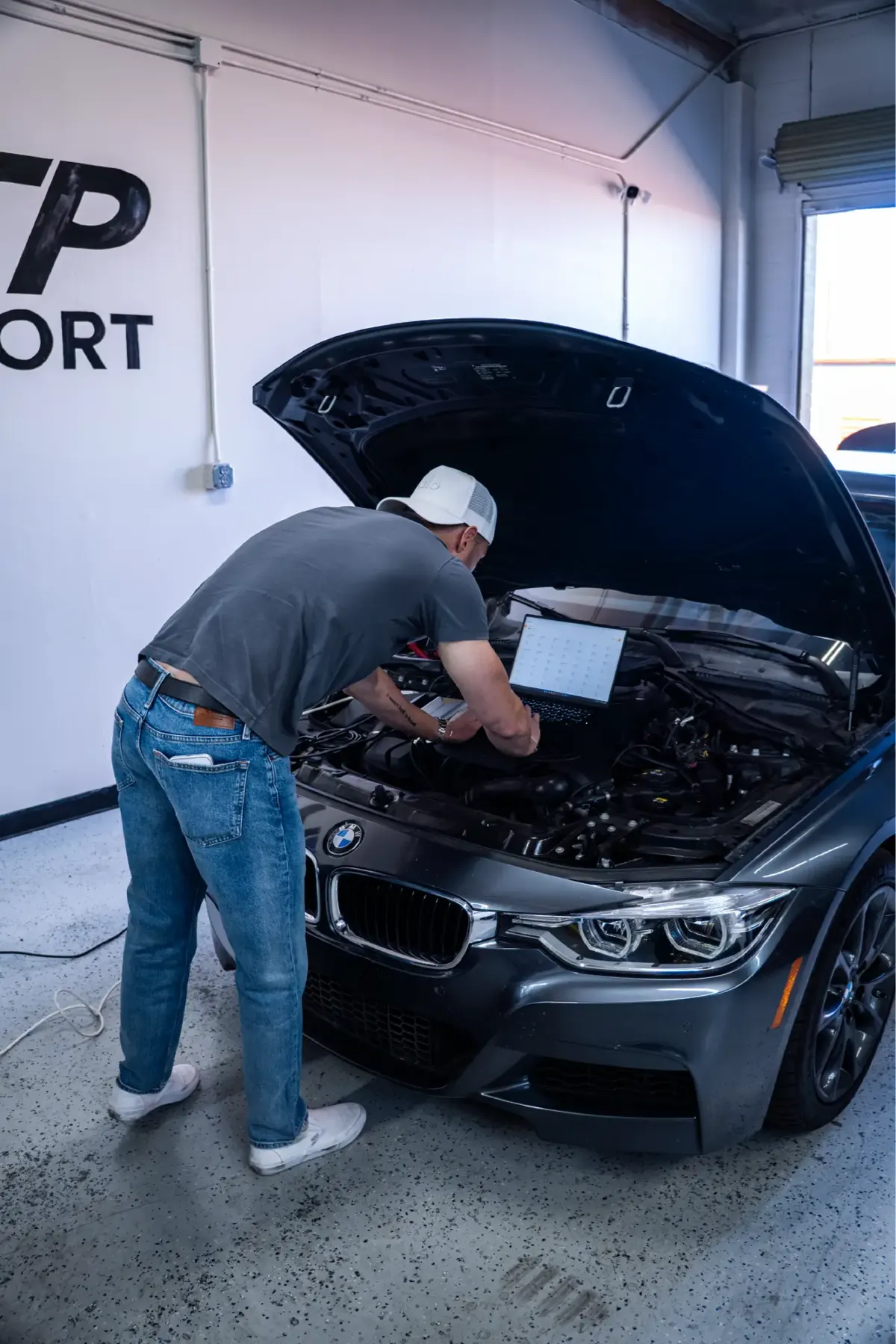
At HTP, tuning is verified with in-house dyno time rather than by feel alone. A dyno session, paired with data logging, can show:
- The power and torque curve across the rev range, not just a peak number.
- Before-and-after comparisons on the same dyno, under similar conditions.
- Consistency from pull to pull, which shows whether heat soak is eroding the gains.
- What the engine computer is doing, through logged timing corrections and intake temperatures, so problems surface on the rollers, not on the freeway.
What it doesn't do is make figures comparable across shops. Different dynos and conditions read differently, so compare numbers from the same dyno on the same day. A chassis dyno measures at the wheels, so expect it to read below the factory's crank rating. Drivability still gets checked on the road, too: part-throttle manners, cold starts and shift quality.
Questions to ask any shop before you book
- Will you inspect and scan the car before tuning it? (At HTP, every project starts with an in-person look at the car, and diagnostics come before any repair.)
- Is this an off-the-shelf map or a custom calibration, and what fuel is it written for?
- Does my DME need unlocking, who handles it, and how long will the car be down?
- How will you verify the result: dyno, logs, a road drive, or all three?
- Does the tune change the transmission calibration, and what torque is the drivetrain being asked to handle?
- Will the car still be emissions-legal for Arizona testing?
- Can I bring my own parts? (At HTP you can, or we can help source them through our performance upgrades work.)
What to bring, and how the process usually runs
Bring service records, a list of every modification with brand and part number, details of any previous tune, recent data logs if you have them, and a note of the fuel you buy. Mention any warning lights or drivability quirks, even intermittent ones.
The order is usually the same: a conversation and inspection, then fixing anything that would undermine a tune. The DME unlock comes next if your car needs one, followed by tuning and dyno verification, then a road check and follow-up logs. How long each step takes depends on the car, the parts and the unlock path, so ask for a realistic timeline up front.
HTP is in Tempe and serves the whole Phoenix Valley, Monday through Friday from 8:00 AM to 5:00 PM. When you're ready, request an appointment or call 480-442-4214, and we'll start with your car and your goals.