Porsche 911 Upgrades: A Practical, Chassis-First Approach for the 997, 991 and 992
Most 911s respond better to tires, alignment and brakes than to more power. Here's the order we'd work in on a 997, 991 or 992, what changes for GT cars, where tuning does and doesn't make sense, and what to check first.
In this article
- Know which 911 you have before you plan anything
- Start with the chassis: tires, alignment and suspension
- Brakes: fluid and pads before bigger hardware
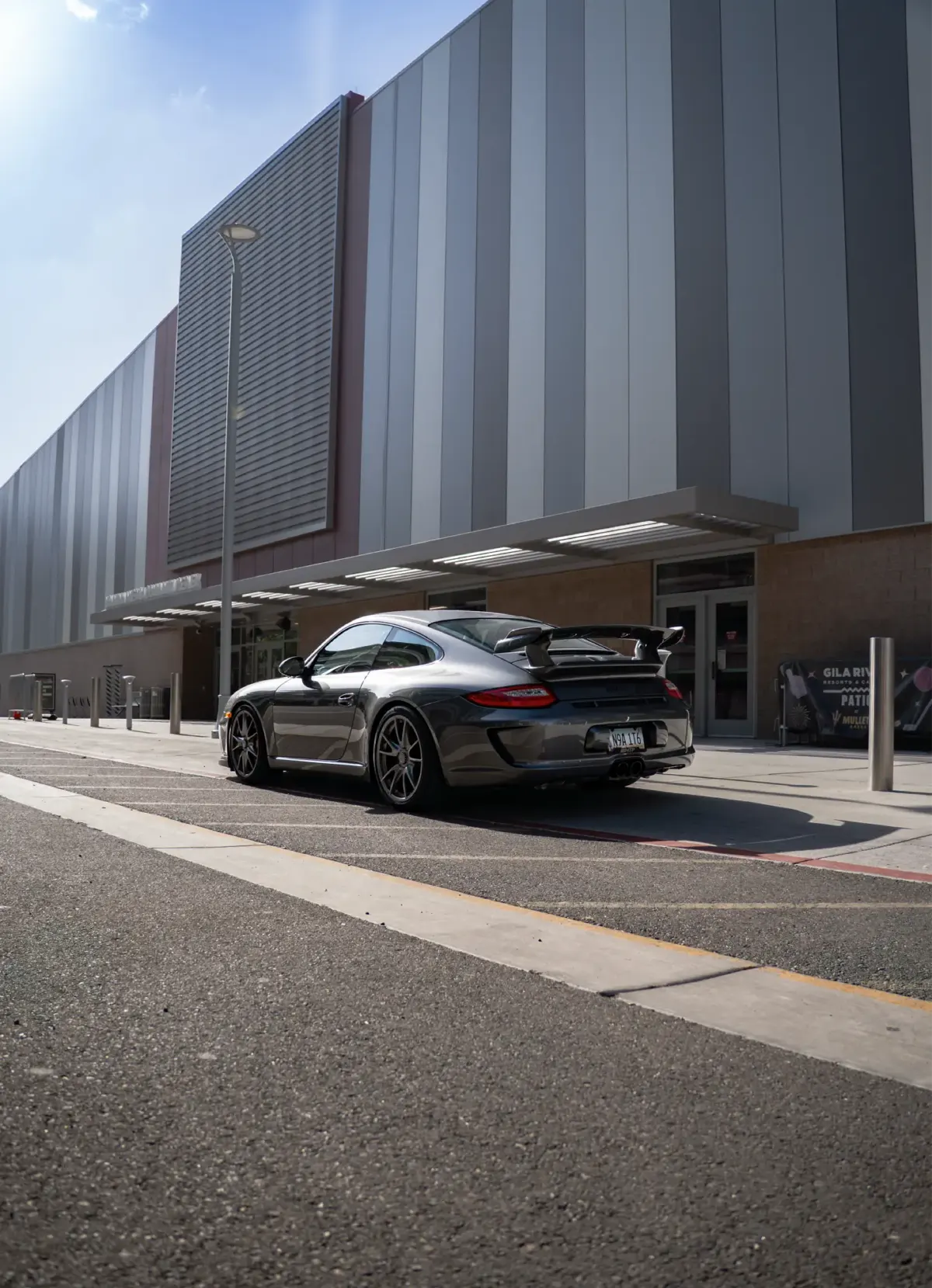
- Exhaust: sound, weight, and the GT-car reality
- Tuning: only where there's boost to work with
- Cooling and known items to check before you modify
- Track prep and the order we'd work in
Where should Porsche 911 upgrades start? With the chassis, not the engine. A 911 leaves the factory with strong brakes and a capable chassis. The upgrades that pay off first usually help that car work harder for longer: tires, alignment, brake fluid and pads, then suspension if you need it. Exhaust and tuning come later, and tuning only where your engine gives it something to work with.
Know which 911 you have before you plan anything
"911" covers very different cars. Porsche's own descriptions of a few recent models show the split that matters most for upgrades:
| Model | Engine, per Porsche | Gearbox, per Porsche |
|---|---|---|
| 911 Carrera (current 992) | 3.0-litre twin-turbo flat-six, 290 kW (394 PS), 450 Nm | Eight-speed PDK standard |
| 911 GT3 (current 992) | Naturally aspirated 4.0-litre, 375 kW (510 PS), 450 Nm, 9,000 rpm rev limit | Seven-speed PDK standard; six-speed GT sports gearbox optional, standard with the Touring Package |
| 911 Carrera T (991, 2017) | 3.0-litre twin-turbo, 272 kW (370 hp), 450 Nm | Manual standard, PDK optional |
| 911 GT3 Touring (991, 2017) | Naturally aspirated 4.0-litre, 368 kW (500 hp), 460 Nm, up to 9,000 rpm | Six-speed manual only |
Sources: Porsche's current Carrera and GT3 press kits, and its 2017 Carrera T and GT3 Touring releases.
In both generations shown, the Carrera is turbocharged and the GT3 is naturally aspirated. Across 997s and earlier 991s, the engine varies by model and year. Confirm exactly what your car has before you budget for anything that depends on it.
Start with the chassis: tires, alignment and suspension
Tires
For most owners, tires are the most effective single change to how a 911 grips, brakes and communicates. Current 911s come on staggered sizes. The current GT3 runs 255/35 ZR 20 front and 315/30 ZR 21 rear, and Porsche says special road-legal track tires are available through Porsche Accessories. For a street 911, fresh tires of the right type and size matter more than the brand on the sidewall. If you're doing track days, a separate track set is worth considering. Always confirm approved sizes for your exact model and year.
Alignment
A factory alignment balances grip against tire wear and stability for road use. A track-oriented alignment shifts that balance toward front grip, and you pay for it in tire life. Talk through how you actually use the car before choosing settings. Re-check alignment after any ride-height or suspension change. Our wheel and tire services cover both the tires and the alignment.
Suspension
Many 911s already have adaptive damping. Porsche describes the current Carrera's PASM sports chassis as having a "variable damper system". Replacing factory adaptive dampers is a bigger decision than it looks. Confirm what a given kit retains or replaces on your specific car before buying, and be honest about how much of your driving is street versus track. GT cars come track-focused from the factory. The current GT3 uses a double-wishbone front axle. On these cars, changes tend to be alignment, tires and consumables rather than new hardware.
Brakes: fluid and pads before bigger hardware
Porsche doesn't skimp on brakes. Its current press kit lists 350 mm discs front and rear on the Carrera, with six-piston front calipers. The GTS gets 408 mm front and 380 mm rear discs. The GT3 press kit lists the same 408/380 mm for its standard brakes, and 410/390 mm for the optional ceramic composite system. For most owners, the brake upgrade is fluid and pads, not calipers.
Brake fluid absorbs moisture over time, which lowers its boiling point. BimmerWorld's brake fluid guide lists the DOT 4 minimums as 230°C dry and 155°C wet, and fluids sold as "Super DOT 4" at 260°C and 180°C. Its advice is to change fluid before every track event. Fit pads that suit how you drive. Track pads are made for heat that street pads aren't, but they often bring more noise and dust on the road. If your car has ceramic brakes, have the discs assessed before track use, not after.
Exhaust: sound, weight, and the GT-car reality
A valved exhaust can stay civil at cruise and open up when you want it to. On naturally aspirated GT cars, though, expect sound and character rather than a headline power gain. In a September 2026 dyno test, Kies Motorsports fitted a 992.1 GT3 with a valved titanium exhaust and replacement headers. It measured peak power about 2 hp lower than stock, with gains of roughly 30 wheel horsepower and 30 lb-ft around 4,500 rpm. Kies notes these are two cars on one dyno, not a controlled comparison. Back in 2014, Fabspeed's 991 GT3 development post projected 25–30 wheel horsepower from a combined package. It also said its muffler bypass pipes for the previous-generation GT3 cut more than 34 lb. Both are vendor figures, so treat them that way.
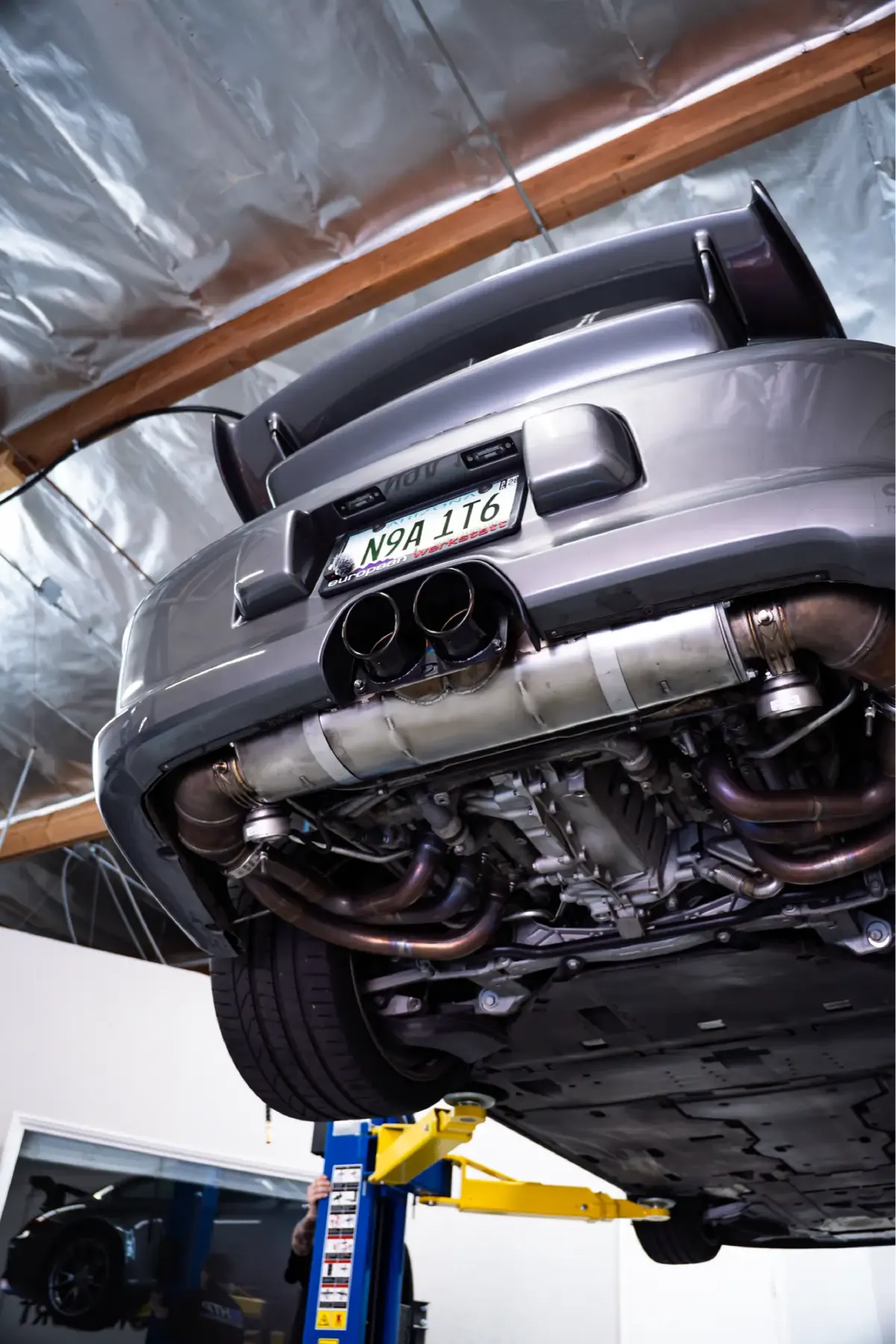
Emissions hardware is where you draw a hard line. Porsche says the current GT3 uses four catalytic converters and two particulate filters. The EPA states that the Clean Air Act prohibits removing emission controls or making them inoperable, and installing parts that defeat them. Catless headers and similar "race" parts are not street legal. In the Phoenix and Tucson areas, emissions testing includes an on-board diagnostic check as well. On a street-registered 911, keep the emissions equipment in place, and confirm fitment for your exact model year before ordering parts.
Tuning: only where there's boost to work with
On a turbocharged 911, a flash tune or custom calibration can change boost and timing within limits the hardware has to support. That's why the inspection before a tune matters as much as the tune itself. Check ignition components and intake temperatures, and think about heat. Porsche notes that the current Carrera's charge-air cooler sits centrally above the boxer engine. In an Arizona summer, that location deserves attention. On PDK cars, ask how the calibration treats the gearbox. Our performance tuning work is verified with in-house dyno time. Before booking with anyone, our notes on what to ask before you book a tune apply to Porsches too.
On a naturally aspirated GT3 or Carrera, software has no boost to raise, so there's much less for it to do on its own. The Kies test above shows how little the peak number moved even with headers and a full exhaust. On those cars, money spent on tires, alignment, brakes and seat time will usually show up on track sooner.
Cooling and known items to check before you modify
Check the car before you add anything. On 997.1 GT3s, the parts maker 9ff says the original plastic coolant connections have a very thin wall in the sealing area that can crack at the O-ring slot. It names the 997.1 GT3 (2006–2008) and GT3 RS (2006–2009), and its install service includes engine removal. Other vendors describe the coolant-pipe issue and its model-year coverage differently. Don't assume either way. Have the specific car inspected, and ask the seller or previous shop what has already been done. Engine-out work like this falls under our engine and transmission builds service, and it is far better found before you add power or track time than after.
Track prep and the order we'd work in
If the 911 is headed to a track day, the basics are the same as for any car. Our first track day prep checklist covers fluid, pads, tire pressures, wheel torque and tech inspection. Our Arizona track guide covers where to go and when.
A sensible order for most 911s:
- Baseline inspection and maintenance. Look at fluids, coolant hardware, tire age and any stored fault codes.
- Tires and alignment matched to how you drive.
- Fresh high-temperature brake fluid and suitable pads.
- Suspension, only if the factory setup is the actual limit.
- Exhaust, for sound and character, with the emissions equipment left in place.
- Tuning, on turbocharged cars only, after cooling and supporting checks, verified on a dyno.
Our performance upgrades service handles the hardware, and race prep covers getting the car ready for the track. Every project starts with a conversation about the car and what you want from it. If that's a good next step for you, request an appointment.