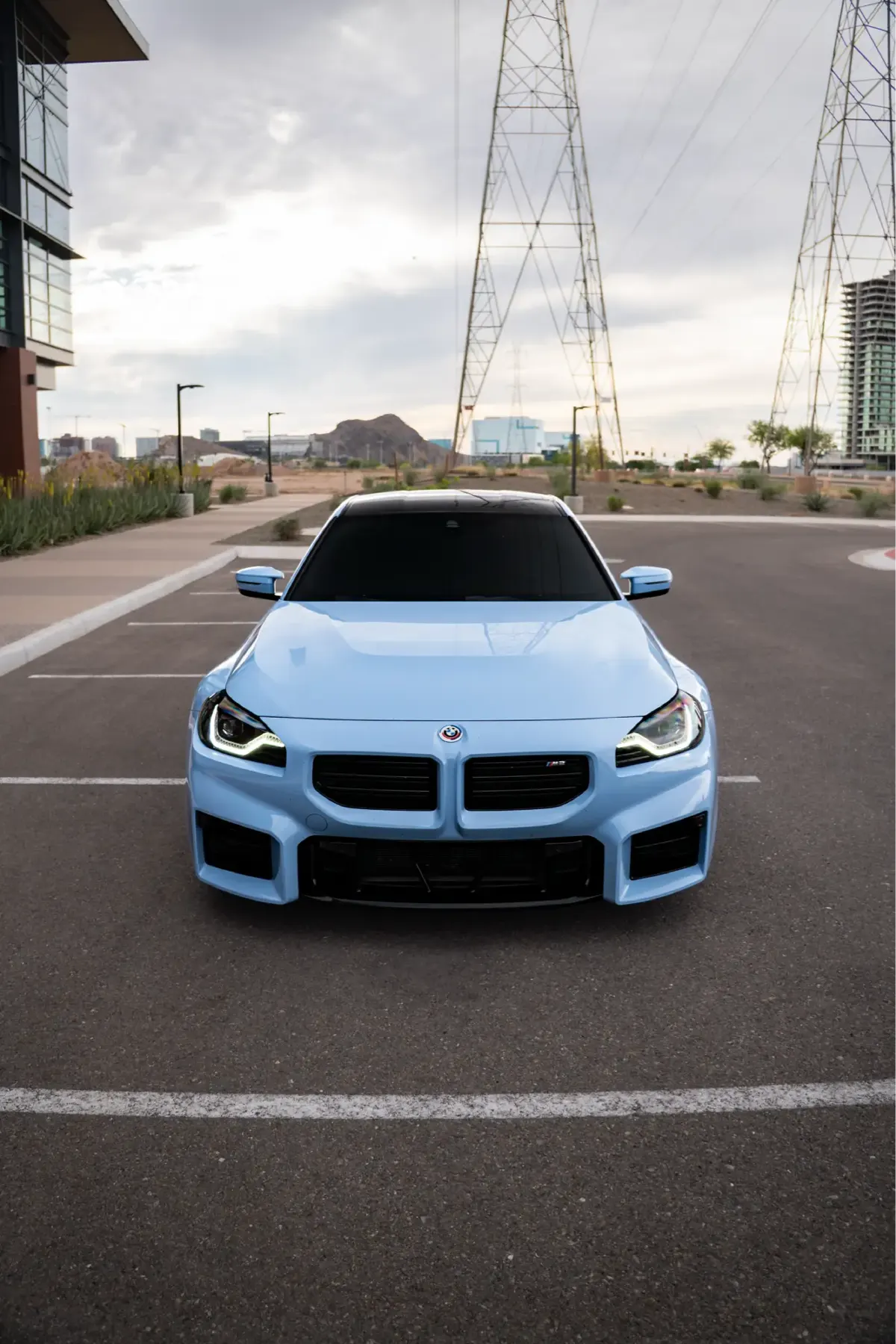
BMW Carbon Fiber Parts for M Cars: Appearance, Weight and Practicality
Most carbon fiber on a BMW is about looks, and that's fine if you know what you're buying. Genuine M Performance vs aftermarket, prepreg vs wet and forged carbon, real weight savings, sun, film and insurance.
In this article
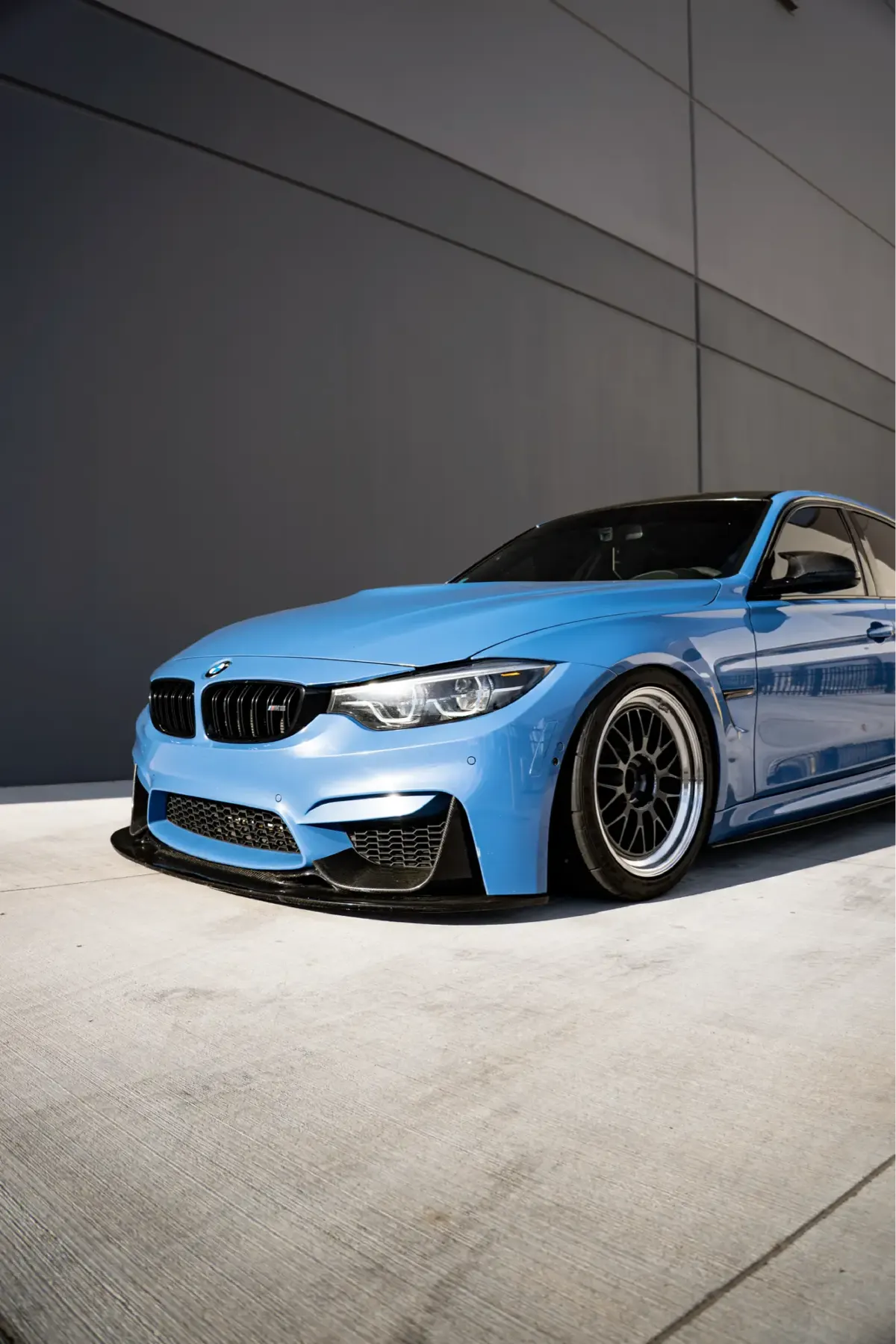
Most BMW carbon fiber parts are about appearance, and that's a perfectly good reason to buy them, as long as you know what you're getting. The useful questions are who made the part, how it was made, how it will hold up to sun and rock chips, and what it costs to replace. Real weight savings mostly come from places BMW already uses carbon, such as the roof.
Where BMW already uses carbon on M cars
BMW's own figures are the best guide to where carbon actually saves weight.
- F80 M3 and F82 M4. BMW's 2013 launch release says "both models feature a carbon roof," a first for the M3 sedan. It puts the saving at "five kilograms (11 lbs)" on the M3 Sedan and "more than six kilograms (> 13 lbs)" on the M4 Coupe. The same release lists a carbon propeller shaft and a carbon strut brace "weighing only 1.5 kilograms (3.3 lbs)."
- G80 M3 and G82 M4. BMW's 2020 release says "the roof of both the new BMW M3 and M4 is made from carbon-fiber-reinforced plastic (CFRP)," with a no-cost moonroof option that "replaces CFRP roof with steel roof." The optional M Carbon exterior package adds carbon front intake inlays, a rear diffuser, mirror caps and a rear spoiler. The optional M Carbon bucket seats "save 21 pounds over the standard M sport seats."
Set those numbers next to a pair of mirror caps or a front lip and the picture is clear. Big panels and structural parts move the scale; trim-level carbon is mostly about the look.
Genuine M Performance vs aftermarket BMW carbon fiber parts
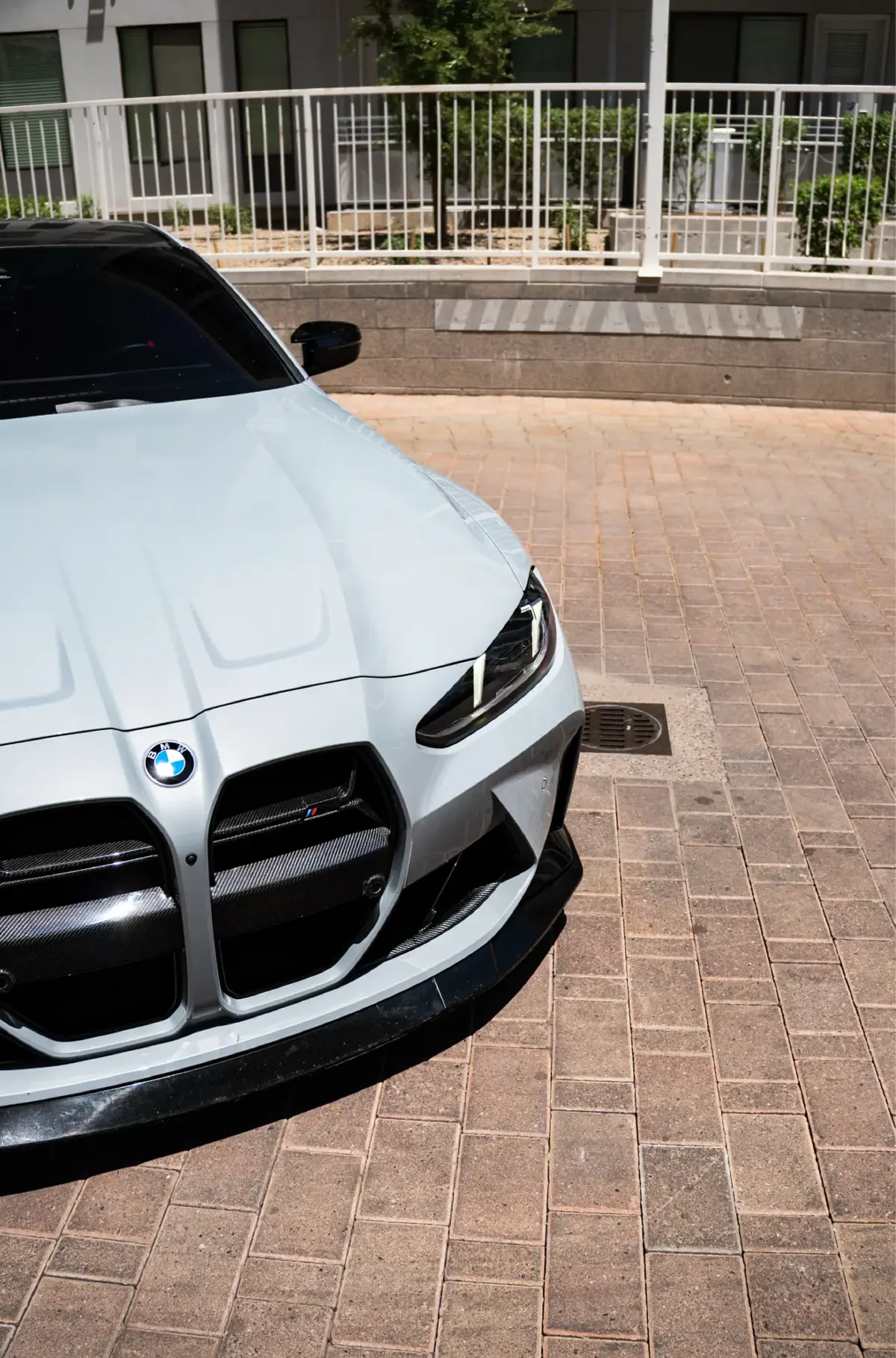
Genuine BMW M Performance parts come with BMW's engineering and part numbers. BMWBLOG's look at 2025 M4 M Performance parts lists carbon covering "the shark fin antenna, fuel filler cap, side gills, and front canards," plus a carbon engine cover, with components sold individually. BimmerWorld's listing for the M Performance front splitter for the G80 and G82 describes a "genuine BMW carbon splitter with a two year warranty" and notes "installation hardware sold separately," a detail that's easy to miss when you're budgeting.
Aftermarket carbon ranges from excellent to poor. At the top end, Vorsteiner's FAQ says its parts are made from "resin pre-impregnated, vacuum-formed carbon fiber" in an autoclave and are engineered to align with factory shut lines and mounting points. It also concedes that "a shop may still make minor adjustments as part of professional installation and bodywork," and advises: "If you plan to paint a part, test-fit it on the vehicle before paint." That's good advice for any carbon part, from any maker.
Before buying any carbon part, ask:
| Question | Why it matters |
|---|---|
| How was it made: prepreg, wet lay-up, forged, or a carbon skin over another part? | Determines stiffness, weight and finish quality |
| Does it use factory mounting points? | Fewer new holes, and the car can go back to stock |
| What protects the finish from UV? | Composite resin needs it (see below) |
| What does the warranty exclude, and who has to install it? | Some makers exclude sun exposure or track use, or require an authorized installer |
| Is it listed for my exact model, year and body style? | Bumpers and mounting points differ between variants |
Dry, wet and forged carbon: what the labels mean
"Dry carbon" is a marketing term, so ask what it actually means for the part in front of you. These are the processes behind the labels:
- Prepreg. Easy Composites' prepreg introduction describes reinforcement "that has already had the activated resin matrix impregnated into the reinforcement," cured in an oven or autoclave at a "precisely controlled temperature (typically 100-150°C)." This is generally the process "dry carbon" is meant to describe.
- Wet lay-up. Resin is applied by hand as the part is built. Rock West Composites' fabrication primer contrasts the two: "Prepreg sheets are already impregnated with epoxy," while in a wet layup "with each layer, you are going to apply additional epoxy resin." Vorsteiner claims its prepreg process makes parts "20–30% stiffer and stronger" than traditional wet-lay carbon. That's a maker's claim, but the direction is consistent with why prepreg costs more.
- Carbon skins. Some parts are an existing plastic or fiberglass piece with a carbon layer on top. That adds material rather than replacing it, so don't expect it to save weight.
- Forged carbon. Easy Composites defines it as "compression moulding a carbon fibre component using randomly oriented short strand carbon fibre reinforcement," which gives the marbled look. Its mechanical testing found results that varied widely with the layup, from below cast aluminium in tensile strength to well above it once continuous fiber was added. It's a different material, not just a different pattern.
Clear coat, UV and the Arizona sun
The carbon isn't what fails in the sun; the resin and its finish are. Rock West's FAQ states that "the resin systems used in composite materials are rarely suited for prolonged UV exposure," and recommends a UV-resistant paint or clear coat where that matters. On a car, the clear coat is doing the protecting. Vorsteiner's warranty excludes damage from "environmental exposure" as well as road debris and track use, so sun damage is generally the owner's responsibility.
For a car that lives outside in the Phoenix area, our general guidance is to treat carbon clear like paint. Park in shade where you can, wash it regularly, and watch for hazing, cloudiness or yellowing. Refreshing a tired clear coat early is usually a smaller job than replacing the part once the clear has broken down.
Paint protection film helps with chips. XPEL's FAQ says its film can be applied to "chrome, aluminum, and brushed metals," and that its satin STEALTH film "transforms glossy paint into a matte look," which is one way owners give gloss carbon a satin finish. XPEL doesn't address carbon specifically, so ask your installer whether a given film suits the part's clear coat.
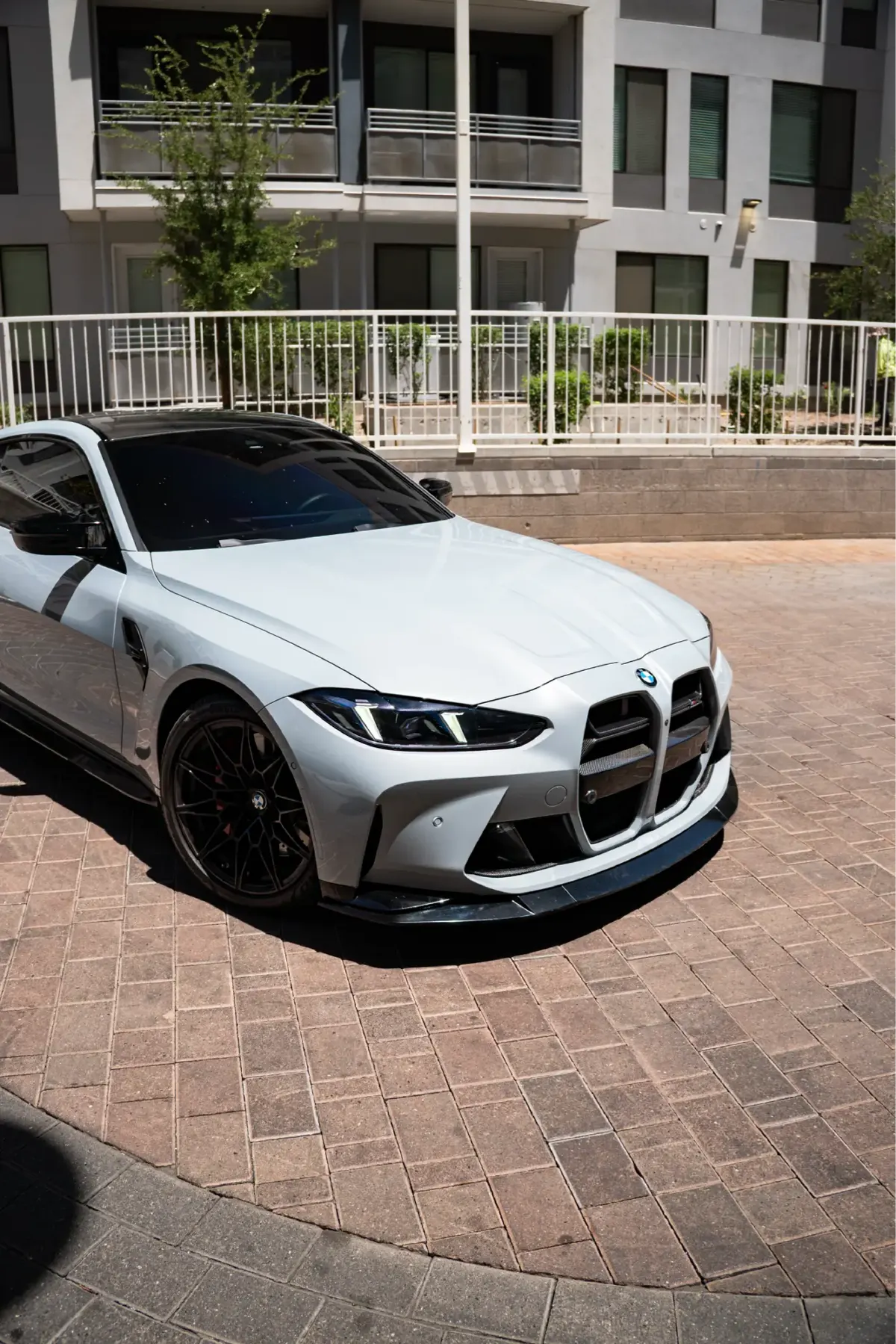
Worth knowing: Film protects a splitter from rock chips, not from scraping a driveway. If you're also lowering the car, read our coilovers vs. lowering springs guide and think about ground clearance before the splitter goes on.
Insurance, damage and repair
Expensive trim needs to be on your policy. Progressive's guide to insuring modified cars is direct: "If you fail to notify the company, the custom elements may not be covered." It describes supplemental custom parts and equipment coverage that protects aftermarket components "up to a certain limit," and notes that it requires comprehensive and collision coverage. Keep receipts and photos of every carbon part you add.
Damage to factory carbon, such as a CFRP roof, is a body-repair and insurance conversation rather than a parts swap. For aftermarket pieces, ask before you buy whether the maker sells replacement parts individually. A cracked splitter is a minor problem when you can buy a new one, and a real one when it's no longer made.
Practical next steps
- Decide why you want it: appearance, weight, or a functional aero part. Each points to a different part and budget.
- Prioritize. One well-made part that fits beats several that need fettling.
- Confirm fitment for your exact model, year and body style, and check what mounting hardware is included.
- Test-fit before paint, film or final install.
- Plan protection and paperwork together: film or coating for exposed parts, and a call to your insurer.
Carbon often goes on alongside wheels and exhaust. Our guides to wheel fitment and offset and BMW exhaust upgrades cover those, and G80 and G82 owners can see where appearance parts fit in our G80 M3 upgrade guide.
We install carbon fiber body and trim components and apply paint protection film as part of our cosmetic upgrades work. Weight-focused parts fall under performance upgrades. You can bring your own parts or get help sourcing them, and one shop handles the mechanical, performance and cosmetic sides together. When you're ready, book a time.